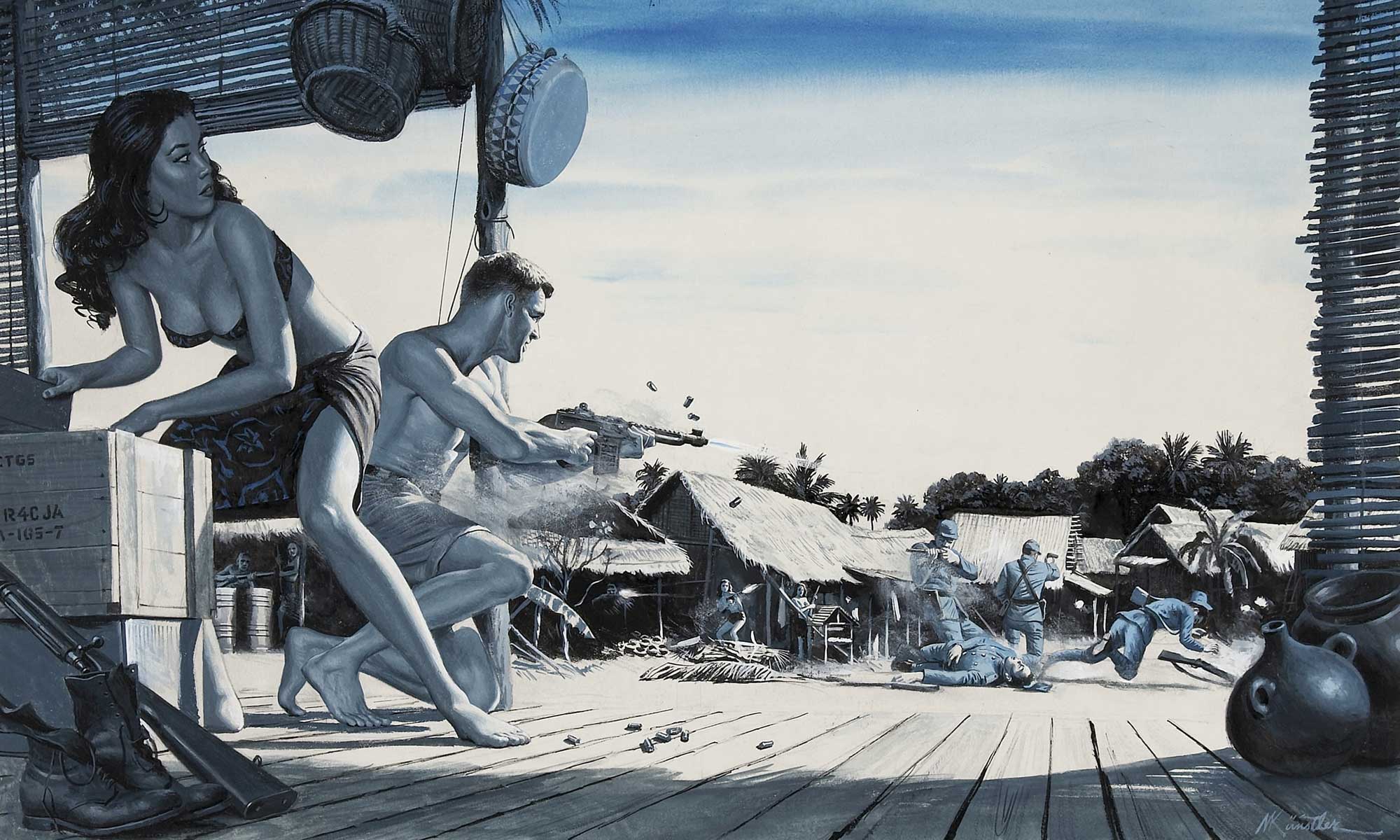
I will never not laugh at this.
Holiday Traditions
https://youtu.be/xJAxRVeKnTE
For what it’s worth, all of Jim Gaffigan’s albums are on Spotify. Recently, I listened to a couple while I was working. Big mistake. This clip is from 2009’s Beyond the Pale.
Help! Magazine
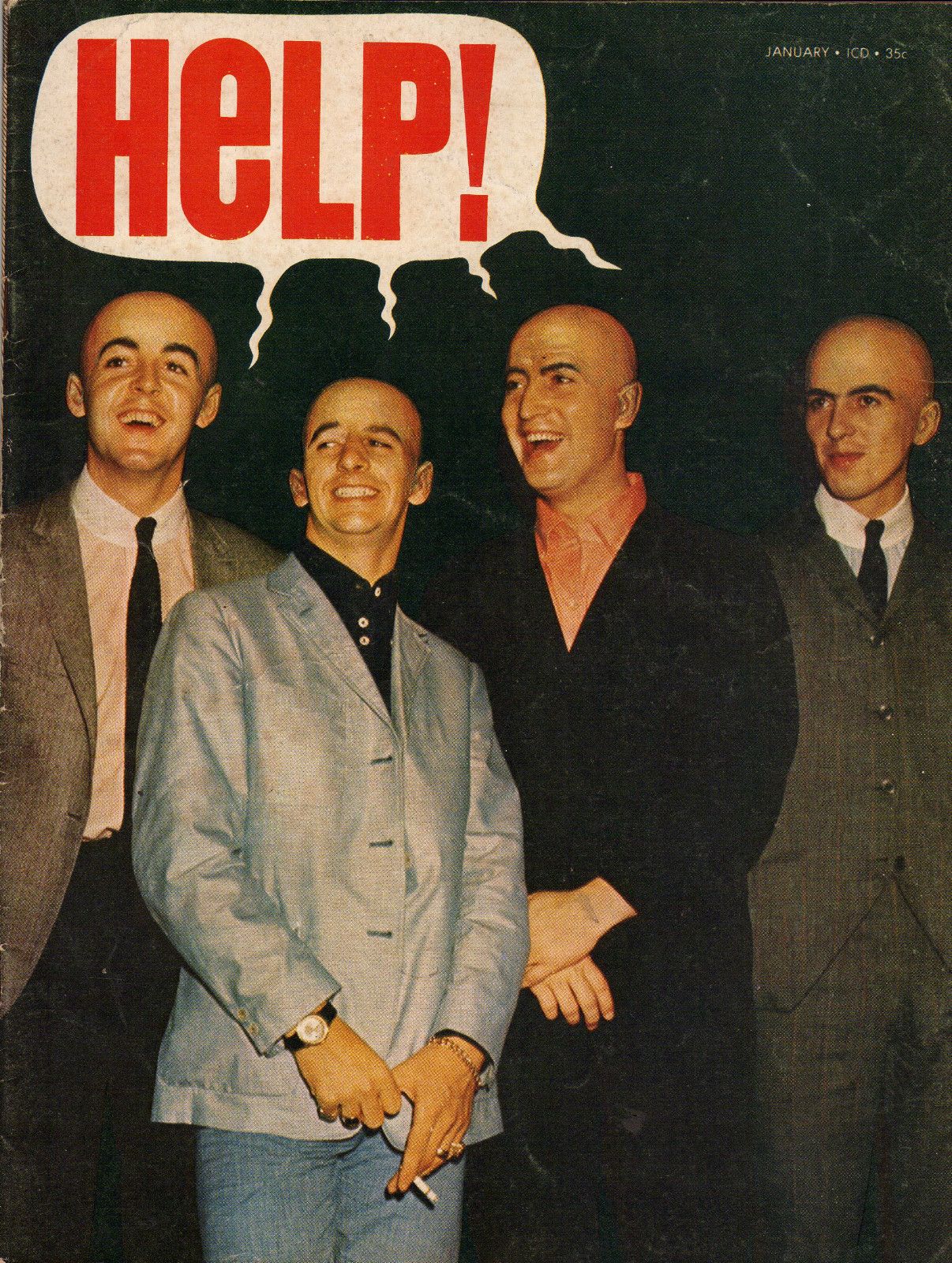
Holy shit, more pop culture dots connected. Before I forget, a few full issues of Help! are available online.
Help! is an American satire magazine that was published by James Warren from 1960 to 1965. It was Harvey Kurtzman’s longest-running magazine project after leaving Mad and EC Publications, and during its five years of operation it was chronically underfunded, yet innovative.
In starting Help!, Kurtzman brought along several artists from his Mad collaborations, including Will Elder, Jack Davis, John Severin and Al Jaffee.
Kurtzman’s assistants included Charles Alverson, Terry Gilliam and Gloria Steinem; the latter was helpful in gathering the celebrity comedians who appeared on the covers and the fumetti strips the magazine ran along with more traditional comics and text pieces. Among the then little-known performers in the fumetti were John Cleese, Woody Allen and Milt Kamen; better-known performers such as Orson Bean were also known to participate. Some of the fumetti were scripted by Bernard Shir-Cliff.
At Help!, Gilliam met Cleese for the first time, resulting in their collaboration years later on Monty Python’s Flying Circus. Cleese appeared in a Gilliam fumetto written by David Crossley, “Christopher’s Punctured Romance”. The tale concerns a man who is shocked to learn that his daughter’s new “Barbee” doll has “titties”; however, he falls in love with the doll and has an affair. Gilliam appeared on two covers of Help! and along with the rest of the creative team, appeared in crowd scenes in several fumetti.
The magazine introduced young talents who went on to influential careers in underground comix as well as the mainstream: among them Robert Crumb, Gilbert Shelton and Jay Lynch. Algis Budrys and other science fiction writers were regular contributors of prose and scripts to the magazine.
A total of 26 issues were printed before the magazine folded in 1965. Volume one (Aug. 1960–Sept. 1961) had 12 issues, and 14 issues comprised the second volume (Feb. 1962–Sept. 1965).
Jackie, We Hardly Knew Ye
Brilliant, brilliant stuff.
Weird Al Takes On The Pixies, First World Problems
The man is a national treasure.
UPDATE! Down the rabbit hole I go.
The Interrogator
Classic stuff.
We Need More Announcers Like This Guy
https://www.instagram.com/p/Bj5H2EABehZ/?taken-by=bobmenery
If I were calling a game, it might sound a little something like this…
https://www.instagram.com/p/BkitUHhB78d/?taken-by=bobmenery
https://www.instagram.com/p/Bl82jG9nQYu/?taken-by=bobmenery
Mike Judge Presents: Tales From The Tour Bus
I think I need Cinemax.
https://youtu.be/Jy8_Ge1RZVU
Who Is Alfred E. Neuman?
Bill Gaines explains Alfred E. Neuman’s origins in this clip from 1977.
Norm Macdonald Has A Show
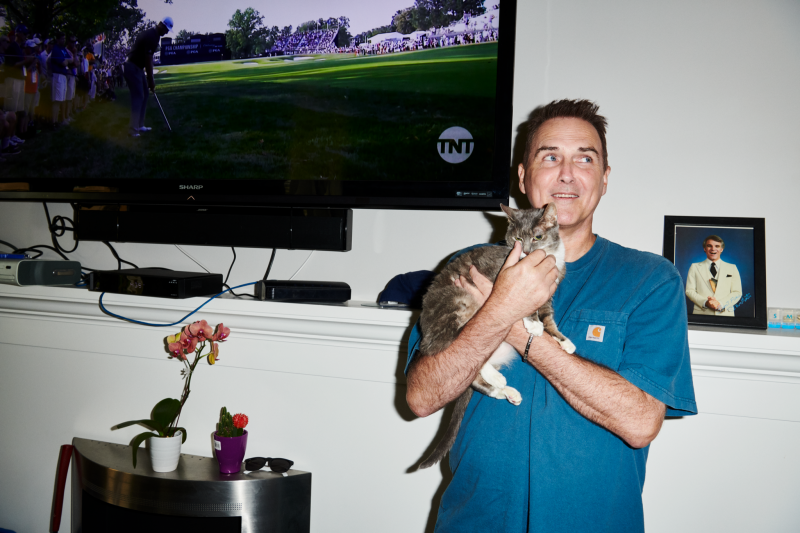
Not sure where you bastards stand on Norm Macdonald, I think he’s hilarious. Also a fantastic writer; his 2016 book, Based on a True Story: Not a Memoir, is excellent. And now he’s got a new show coming to Netflix on September 14th called Norm Macdonald Has a Show.
In anticipation, here’s a recent New York Times profile that’s worth a look. See what you think …
Midway through his third orange Fanta, in the course of explaining why he doesn’t talk to strangers anymore, Norm Macdonald told the story of one of his stalkers. We were at the Panini Kabob Grill, an aggressively normal eatery in a planned community of shops and condos not far from his home on the Westside of Los Angeles. It was April, sunny but mild. The night before, Macdonald taped an episode of his new Netflix talk show, and he still had makeup in the crevices around his nostrils when he arrived for brunch. We were sitting with Lori Jo Hoekstra — Macdonald’s producing partner for the last 20 years — and a representative from Netflix. The tables were heavily lacquered, the menus were laminated and there were a few discreetly placed TVs. It was the kind of place where Macdonald was both …
You can read the rest here.