I’m no hot-shot investor, but I know enough not to hand my money over to someone who laughs like that.
Patrick Boyle is at his best when taking down phonies.
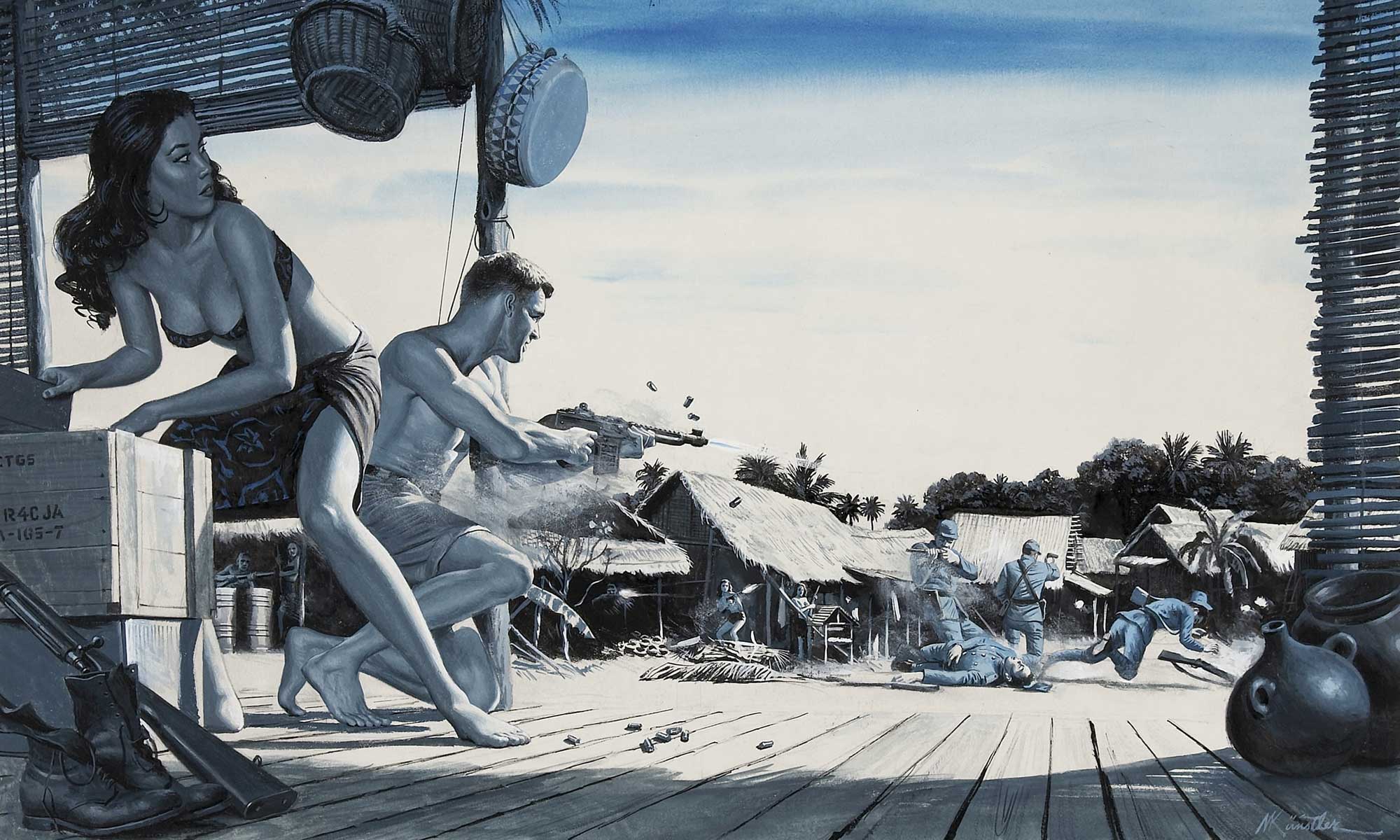
Tales of True Adventure for Rugged Men Not Unlike Yourself
Do yourself a favor: put on your best headphones and listen to all eight videos, either one at a time or all at once. You won’t regret it.
Of course I had to go see this despite reservations about Matt Damon. How could he possibly convince as the wily Odysseus? Well, the script helped him out by ignoring “wily” and turning Odysseus into a pensive, guilt-ridden bore, a complete anachronism. Mr. Damon had no problem with that.
But there’s plenty to like. Most of Homer’s Odyssey is a flashback, and Christoper Nolan handles matters temporal very well. The Polyphemus episode, as well as those of Circe and Scylla/Charybdis were excellent. As were the Shades emerging from Hades. Cool shipwrecks too.
The Laestrygons episode might have been better had Monty Python and the Holy Grail never existed. For some reason the giants were dressed in medieval armor, which made me expect them to demand a shrubbery or say “none shall pass.” As they were chasing the Greeks off the island, I was half-expecting the Greeks to start shouting “Run away, run away!”
In a similar vein, Agamemnon resembled Darth Vader, which seemed comical to me. I was reminded of Rick Moranis in Spaceballs.
Some of the inevitable changes to Homer worked well, others not. The movie cut the island of the Lotus Eaters, instead having Calypso give Odysseus lotus flowers to keep him forgetful and happy. Excellent idea. But for some reason Helen and Clytemnestra are now twins. Why? I get changes that make a leaner movie, but that seems random. And where the hell was Laertes?
Borrowing Sinon from the Aeneid was an excellent idea, but poorly executed. Excellent as a plot connection that I won’t get into here. But completely wrong as a character. Sinon was the point man for the Trojan Horse trick, a glib con-man. But in this movie he’s an awkward innocent who utters a few words after getting mortally wounded.
The Trojan Horse episode was well-depicted despite Sinon’s botched character and Agamemnon as Darth Vader. But due to Sinon’s reduced role and the absence of horse-doubters (Laocoon and Cassandra), the Trojans’ decision to accept the horse would seem like idiocy to those unfamiliar with the story. As a majority of Americans can no longer tell you who won WWII, that likely would be most people. Granted, Laocoon makes no appearance in Homer’s version, but if you’re borrowing Sinon to add coherence, why stop there?
My biggest problem with this movie involves a spoiler, so I’m mum on that.
Overall I enjoyed it and would recommend seeing it on the big screen. Shipwrecks. Mythical Monsters. Minimal CGI. Yes, please.
Last week I noticed that I’d added this album to my streaming library around a year ago. I had no recollection of adding it or where I’d heard about it. Finally, I remembered that I’d seen it mentioned by the Redd Kross brothers in an episode of What’s In My Bag? It’s perfectly decent psych-pop. Beginning of the song above is very similar to “Baby Lemonade” by Syd Barrett. Not exactly rabbit hole worthy, so here’s a cut & paste:
The Fancy Space People began when the unlikely duo of Germs drummer DON BOLLES and quirky solo chanteuse NO-RA KEYES started receiving communications from invisible entities claiming to be from “Fancy Space,” asking them to present their leaders’ (presumably) benevolent messages to the people of Earth, secreted within neo-classic rock tunes. Told that they were chosen not so much for any musical talent they might possess, but more because they would fit into the elaborate space outfits, Don and Nora, neither of whom had much going on at the time, readily agreed.
The aliens assured them that their proposed role didn’t involve any such unsavory or strenuous activities as cattle mutilation or crop circle construction. All they had to do, they said, was play the music and wear the outfits. Said outfits ended up looking positively stellar, indeed, and the rock songs – or “audio hieroglyphs,” as the entities called them – turned out to be classically astute, yet surprisingly fresh and new sounding; fun, even! Soon, 6 other musical miscreants – X-Orb-X, Danny, Bri-On, Shonn, Saratonin and Paul Roessler (Screamers, Nina Hagen Band) – were recruited into the cult / band to play the other instruments and wear the remaining space suits; et voila: Fancy Space People was born.
That was 4 years ago – nowadays their often sold-out shows – the so-called Fancy Space Rituals – incorporate film, video, smoke, lights, crazy costumes and their uniquely derivative Pleiadian Power Pop to great effect, putting hundreds of bedazzled fans into ecstatic, dervish like states, complete with lots of spontaneous dancing and people singing along with their lighters in the air, at venues all over California, where the band live and record in a top-secret compound in an industrial area just south of Los Angeles. Their songs range from moody Mellotron space hymns to Glitter Rock stompers, Snow Pop to Psychedelic Prog Epics, 60s Girl Group to 70s Krautrock, and remind one of T Rex, Bowie, Abba, Sparks, and even Amon Duul II.
Already they have attracted such enthusiastic collaborators as BILLY CORGAN of the Smashing Pumpkins, MARS WILLIAMS from the Psychedelic Furs, and Belgian Synth Witch SHAZZULA NEBULA. Their eponymous debut vinyl EP was mixed and recorded by KERRY “STUDIO DOG” BROWN (Smashing Pumpkins, Kelley Deal, The Frogs) & KEVIN DIPPOLD (Smashing Pumpkins) and produced by DON BOLLES. It features the group’s theme song, “Fancy Space People,” which seems to advocate saving the Earth by eliminating the humans, “Pleiadian Youth,” a song celebrating – and also warning against – the new exoteric invisible nation, and the hauntingly ethereal “Pyramids (Shoot Golden Rays),” a song that accompanies a popular Youtube video by No-Ra that looks a bit like a new-age sci-fi Kenneth Anger film.
Can a ridiculously attired Los Angeles Glitter rock space cult, channeling cryptic messages from Fancy Space really save the Earth and usher in a new Golden Age? Maybe yes; maybe no. But whatever the case, if you think you might enjoy a bunch of heroic bubble-glam pop anthems, delivered with an ass-kicking punk rock authority and an almost Crass-like dedication to an alien agenda, then a close encounter with Fancy Space People will, at very least, help to make the remainder of our planet’s juggernaut into the abyss a whole lot more fun and entertaining for you than it otherwise might have been.
Um, ok.
The various 60’s projects of Curt Boettcher are an addiction I come back to every couple of years. There’s a 30 minute Andrew Hickey episode on “My World Fell Down” that tells the full, ultimately sad story. Here’s what I know: “My World Fell Down” was originally a flop single by the Ivy League, a British band. Across the pond in LA, Gary Usher* thought it could be a hit, but he could find no takers. So he got some studio musicians (a pre-fame Glen Campbell on verse lead vocals and Bruce Johnston on chorus lead vocals) to record it. He pitched it to an A&R guy at Columbia who signed the “band.”
But there was no band, which Usher didn’t mention. Friend Curt Boettcher had a band called The Ballroom, mostly a studio project. Boettcher had made a name for himself by writing amazing vocal arrangements for the Association, among others. It’s his work you hear on their hits. He was a Brian Wilson type (BW admired him and was likely influenced by him) who spent many studio hours on a single song, which was unusual back then for anyone not named the Beatles or Brian Wilson. Anyway, Usher brought in Boettcher and the Ballroom to complete an excellent album which was released under the name Sagittarius. Boettcher ended up dominating the project. “My World Fell Down” and “Hotel Indiscreet” were released as singles. The first did ok on the west coast but flopped nationally. The other just flopped. Both single versions had Musique Concrete sections that were edgy for the time.
Boettcher’s next project was The Millennium. They made one album, Begin, which is brilliant, a sunshine pop masterpiece with far less filler than the Sagittarius album. At the time it was the most expensive album ever made due to CB’s obsessiveness. It flopped, so Columbia dropped them. Perhaps it could have gone somewhere had they not been so studio obsessed, or maybe sunshine pop needed the novelty of a family group like the Cowsills to sell it. I also wonder if the burgeoning acid rock scene up north in the Bay area rendered them passe. I’m not sure about the timing, but tastes changed very rapidly back then, and vocal pop was getting to be old hat.
And maybe it still is. Back when we were doing Music League, I posted a couple of the songs above, and they tanked. But but give them a shot. Some of it sounds twee, but the musical ideas are outstanding. I think all of the released music is available for streaming. Word is, there’s strong work that’s never become available. Even the released music used to be very hard to find. “My World Fell Down” appeared on Nuggets, and Various CD releases of the Sagittarius and Millennium albums trickled out over the years, but a small box of all the Millennium sessions didn’t come out until 2021. We’re in extreme cult territory here…
”Another Time” would have been perfect for The Carpenters.
*producer of the Byrds and Beach Boys, and best of all, the horror hot rod/surf album Dracula’s Deuce by the Ghouls, featuring such classics as “The Little Old Lady From Transylvania” and “Be True To Your Ghoul.”

EV’s, that is. Because not many people want one anymore. But I did after driving this one. You see, Renfield the Younger is beginning to learn to drive this summer. The Renfield fleet consisted of two manuals and one automatic. So we needed another automatic. Mrs. Renfield led the vehicle search with my input, as she would likely be the main driver. We looked at ICE cars in a designated price range; mostly hybrids due to her current vehicle (the main family car) being a thirsty guzzler. The best vehicles were very good and reliable, but decidedly ho-hum and overpriced: everyone wants a hybrid right now. Wait times are very common, and you don’t get much negotiation leverage when the car isn’t on the lot with the dealer eager to see it drive out. So one day Mrs. Renfield checked out a Mustang Mach E, mostly because she thought it looked cool. She really liked it. I wasn’t in favor at first, but when I drove it I was mightily impressed. My main concern was depreciation, but the price was good.
ICE manuals are still my four-wheeled drugs of choice, but I’ve never driven an ICE automatic that I enjoy as much as this EV. Precise steering, agile handling, slightly bumpy ride like a sports car, but not jarring. Plenty of power and great acceleration. Smooth power delivery. Was this purchase an error? Ask me in a year or two. Some kinks in the earlier generation seem to have been ironed out. We shall see.
I swear I’m not trying to turn this blog into “look what I just bought” Facebook nonsense. I just posted about it because we’ve discussed EV’s here before. I’m still of the opinion that the attempted EV transition via government fiat was a lousy idea driven by politics, not reality. The current infrastructure cannot support mass adoption. Almost everyone owning one of these will also need an ICE car. And I have no idea how a non-homeowner could get by with one due to charging access, or lack thereof.

I’m usually not a fan of composer t-shirts, but I had to make an exception here: the fact that this image looks more like Clark Kent than Shostakovich makes some kind of demented sense to me. Hardly matters anyway. Only 0.000002% of Americans will know who it’s supposed to be.
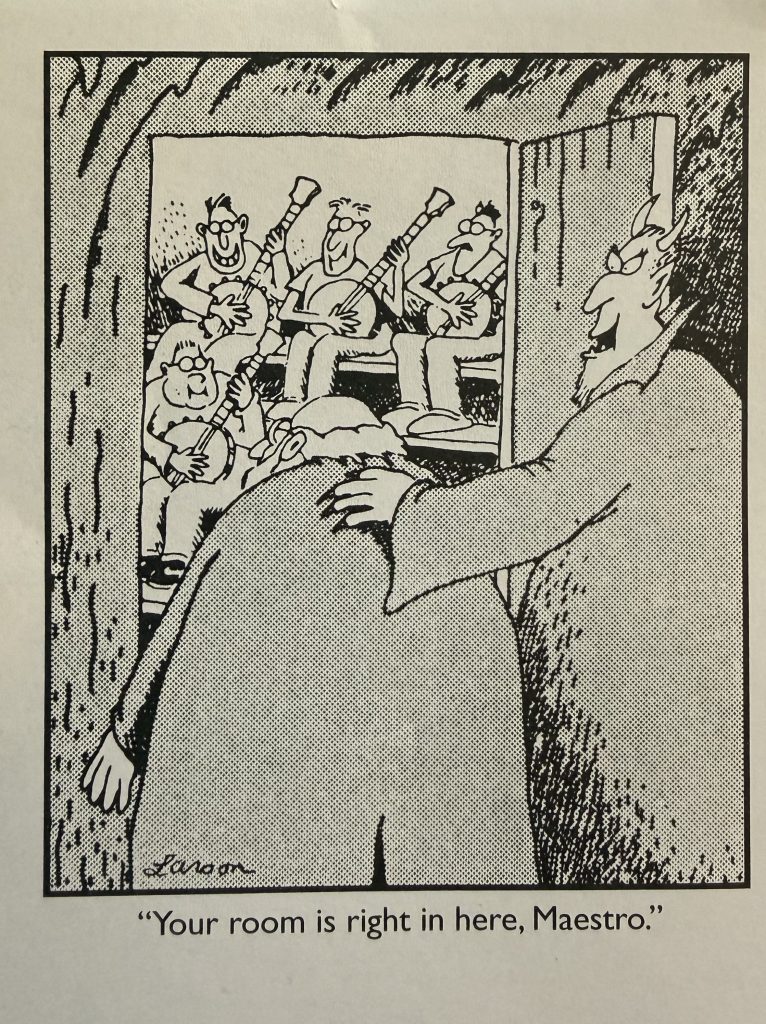 Survey of the Bastardate: what instrument would the Evil One choose to torment you for eternity?
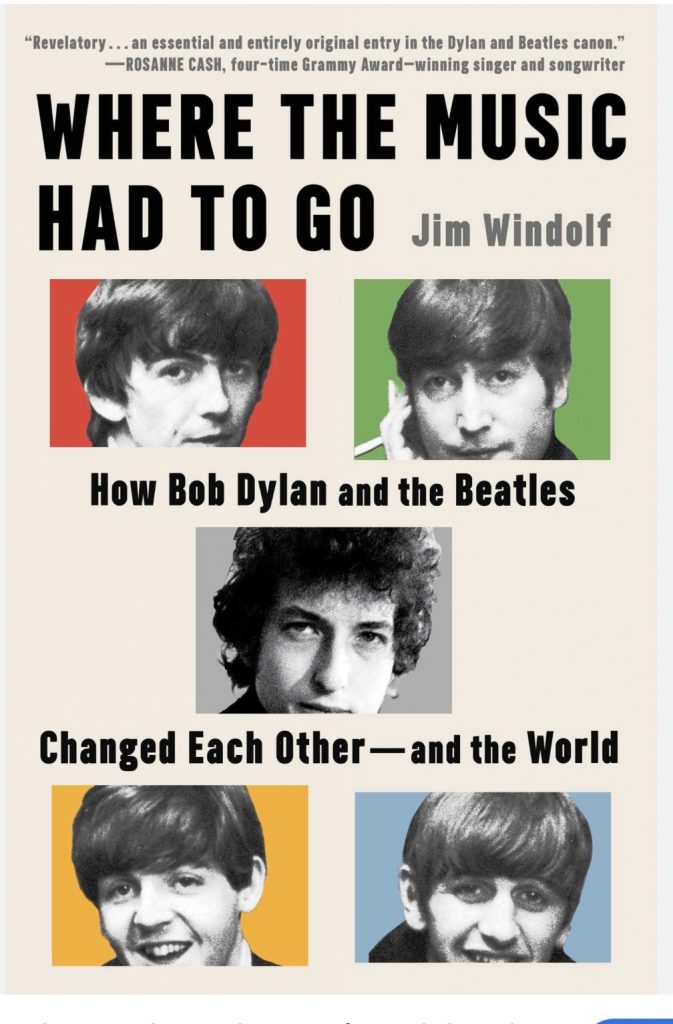
You’d think the Beatles and Dylan had been examined from every possible angle, but nope. Here’s a chronological look at their careers in parallel, with plenty of commentary on their influence on each other, friendship, rivalry, etc. I’m about three fourths in, and I’ve enjoyed it. Good mixture of things I know, things I’d known and forgotten, and things I’d never known. It’s always interesting and moves along. A few of the analogies seem a bit forced, but of course no two people will agree on everything.
As I’m biased towards music over lyrics, I might have preferred a book on the Beatles and Brian Wilson, but no doubt they had fewer interactions.
One minor peeve. Like just about every other Beatles book, the quote about “Aeolian cadences” and Mahler’s Song of the Earth rears its ugly head like it’s evidence of the Beatles’ artistic viability. I don’t get why these journalists who are obviously good at research never bother to examine that quote. “Aeolian cadence “ has about as much meaning as “C major time signature” or “F minor drumstick.” Or “the explosion left a 15 mph deep crater. “ It makes no sense. And the song in question, “Not a Second Time,” absolutely does not end with the same chords or chord pattern as Song of the Earth. There’s no room for debate on the matter, it’s factually wrong.
I can’t believe that quote is still getting recycled. Just put it in the trash.
It’s March 7, so here are my favorite 7ths. Rather than blab for twenty paragraphs, I’ll let these things speak for themselves. I like how Szell takes the catchy second movement fast, closer to a true allegretto than the others. Some other recordings do that, but I don’t remember hearing one that didn’t have some disqualifying issue for me.
Also, a special shout out to Sir Thomas Beecham with the Royal Philharmonic. I like it as much as the ones above but figured I should stop at three.