When a scammer connected to my PC, I was able to reverse their connection and discover that they had CCTV. You’re going to see the most detailed exposé of a tech support scam ever seen on YouTube. The company were called Faremart.com – A travel agency in Delhi who use their buildings and VOIP telephony to run various scams. They are one of hundreds of scam call centres in India and this one group will make over $3 million per year with scams.
Electronic pop duo Silver Apples released their first album in ’68. I believe that makes them the first ever electronic pop band, predating Can, Kraftwerk, et al. If any of you bastards know of someone prior to these guys, please clue me in. They sold very few albums, but one somehow ended up in my house in the mid 70’s. Ignorant that they predated Kraftwerk, I pretty much dismissed them because I didn’t like the songs very much. They typically set up good initial ideas but, in my opnion, are let down by the singing and trippy lyrics, which creep me out for some reason. But the electronic sounds are innovative and excellent. Those sounds come from “The Simeon,” a primitive, homemade synth built by singer Simeon Coxe, an Alabaman. He was just stringing together old WWII oscillators and claims that at the time he’d never heard of Moogs or other synthesizers in develpoment.
Silver Apples’ legacy is hard to pin down. Some 90’s experimental bands have cited them as an influence, but what about the electronic innovators of the 70’s? You never heard a word about these guys back then, so did they influence Krautrock, Eno, Devo, prog rockers, or just work in a vacuum? Who knows, but I can’t help but love their oddball creativity. Very much in the tradition of American cranks innovating alone in the basement or garage. But overall they show that first usually isn’t best.
Here is their full story, which is very interesting. If you want to hear more, below is the entire first album and one song, “You and I”, from their second and final album, which was withdrawn soon after release. The opening of “You and I” is suspiciously like “Station To Station,” but I have no idea if Bowie was familiar with it. The whole second album, which I haven’t heard, is also on YouTube.
Holy shit, this takes me back. For the uninitiated, Wiki-wiki-wikipedia says …
Myst is a graphic adventure puzzle video game designed by the Miller brothers, Robyn and Rand. It was developed by Cyan, Inc., published by Brøderbund, and released as a PC game for the Macintosh platform in 1993. In the game, players are told that a special book has caused them to travel to Myst Island. There, players solve puzzles and, by doing so, travel to four other worlds, known as Ages, which reveal the backstory of the game’s characters.
A few months back, Ars caught up with Myst developer Rand Miller … at the Cyan offices in Washington state to ask about the process of bringing the haunting island world to life. Myst’s visuals lived at the cutting edge of what interactive CD-ROM technology could deliver at the beginning of the multimedia age, and, perhaps unsurprisingly, fitting the breadth of the Millers’ vision onto CD-ROM didn’t happen without some challenges.
In a way, I’m kind of shocked to hear that Cyan is still around. But then again, they made a fortune on Myst and Riven (the followup), so I really shouldn’t be.
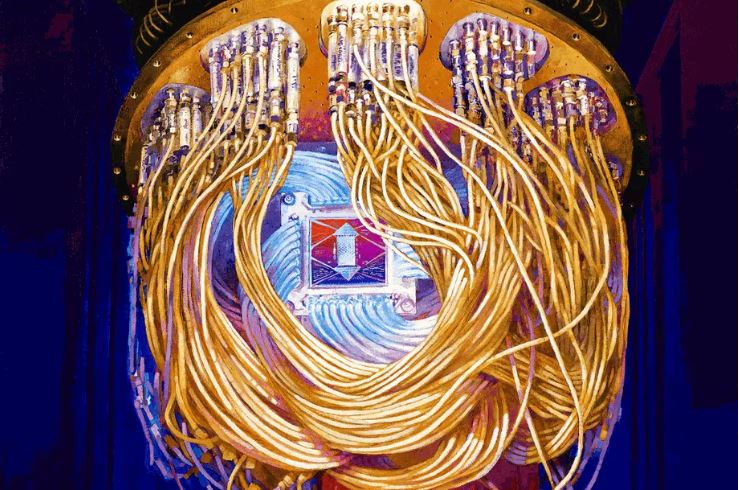
(artist’s drawing of Google’s quantum computer chip)
In October, Google built a quantum computer that solved an incredibly hard problem in 200 seconds — a problem the world’s fastest supercomputer would take 10,000 years to solve. This is called “quantum supremacy”, and has been compared to the Wright Brothers’ first flight.
”Until recently, every computer on the planet — from a 1960s mainframe to your iPhone, and even inventions as superficially exotic as ‘neuromorphic computers’ and DNA computers — has operated on the same rules. These were rules that Charles Babbage understood in the 1830s and that Alan Turing codified in the 1930s. Through the course of the computer revolution, all that has changed at the lowest level are the numbers: speed, amount of RAM and hard disk, number of parallel processors.
But quantum computing is different. It’s the first computing paradigm since Turing that’s expected to change the fundamental scaling behavior of algorithms, making certain tasks feasible that had previously been exponentially hard. Of these, the most famous examples are simulating quantum physics and chemistry, and breaking much of the encryption that currently secures the internet.”
It’s no exaggeration to say that Half Life is one of the best, most influential PC games ever made – maybe even the best, period. For my money, Half Life 2 is the best in the series; even though it came out in 2004, it still holds up. (I’m replaying it now, as a matter of fact.)
After HL2, Valve decided that episodic games was the way forward, so fans wouldn’t have to wait years and years for the next installment. Half Life 2: Episode One came out in June of 2006, then Half Life 2: Episode Two was included with several other games in October of 2008. It had a hell of a cliffhanger, and then … nothing.
Fans waited patiently – then impatiently – as rumors came and went. Every interview with Valve was an opportunity to inquire about the status of Half Life: Episode Three, but the company always politely declined to comment. Many years passed, and it never materialized. Interest slowed to a trickle as the game became an Internet punchline. So the announcement of Half Life: Alyx is HUGE.
To be clear, this isn’t Half Life 2: Episode Three. Events in this game are set between Half Life and Half Life 2. Hardcore fans will happily take anything – as long as it’s good – and Half Life: Alyx is the perfect game to launch the company’s VR platform. Rather than posting the short teaser trailer Valve released, I thought I’d include this guy’s take. See what you reckon.
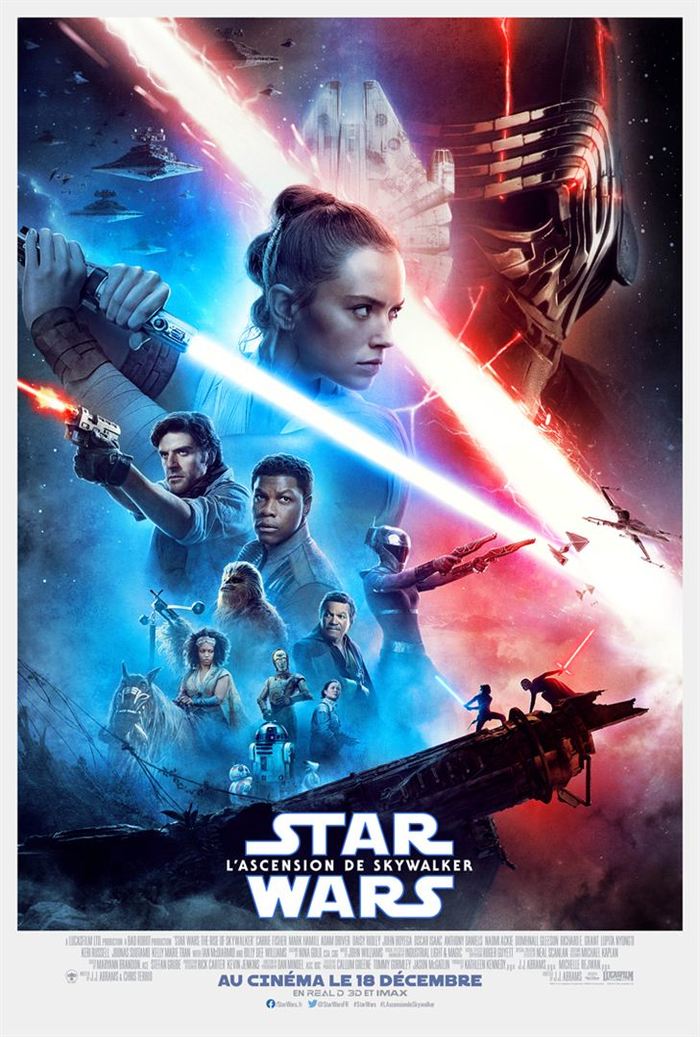
Tickets purchased, expectations lowered. Sigh. The Rise of Skywalker is currently hovering at a 53 on Metacritic.
And, submitted for your approval, a rare and wonderfully insightful thought plucked from the Internet. (Birth. Movies. Death., specifically.)
I couldn’t agree more.
If you go back and look at George Lucas’ “Star Wars” from in the context of 1977, it fits right into the canon of New Hollywood greats. But while his contemporaries were pulling from the French New Wave or Italian neorealisim, George Lucas cribbed influences from Kurosawa, Flash Gordon, John Ford, Joseph Campbell. It felt personal, in its own strange way, driven by the point of view of one auteur. As timeless as it seemed, it felt current and relevant to the outside world; its not hard to draw a comparison to the Vietnam war watching Star Wars, fresh on the minds of every American in the late 70s. It took risks, even when it was traveling in cliches and archetypes, and went on to inspire multiple generations of creativity.
But somewhere along the way, Star Wars became just another risk averse IP in our increasingly IP-driven world. As its universe expanded, it ironically put on a cap on the possibilities of what “Star Wars” could mean. It is now Star Wars as product, “market-researched, audience-tested, vetted, modified, revetted and remodified until they’re ready for consumption” as Martin Scorsese recently put it. Where once Star Wars drew on the outside world, its now merely about itself and its finite number of themes and ideas. The films that once showed audiences things they’d never seen before is now just another franchise built to deliver exactly what we remember, forever and ever, until we’re all dead.