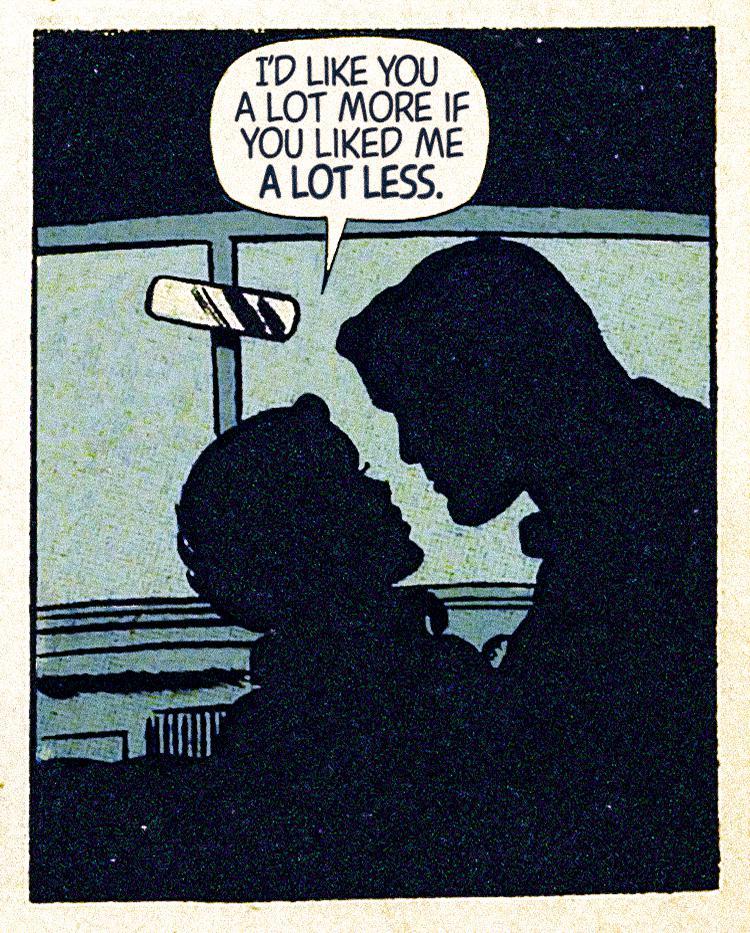
Or is it?
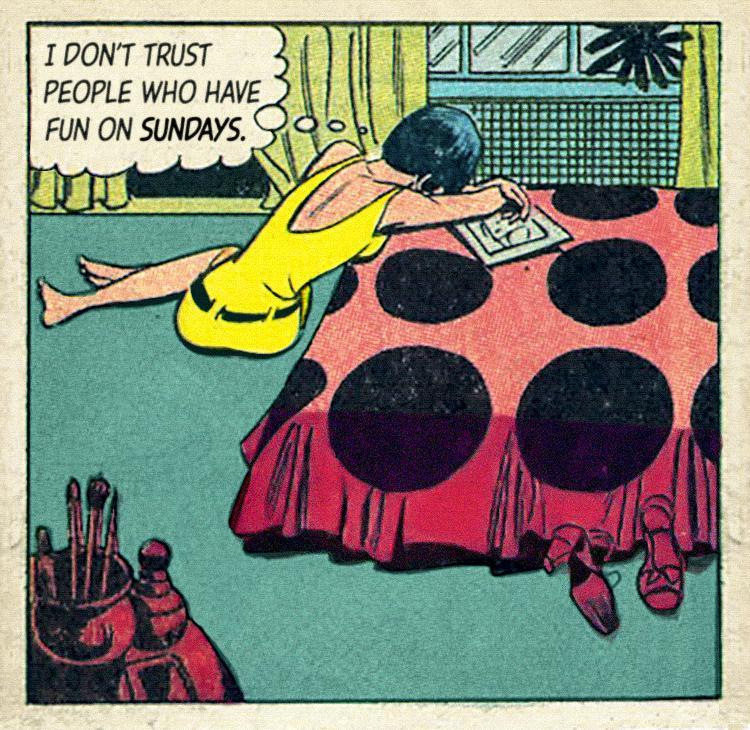
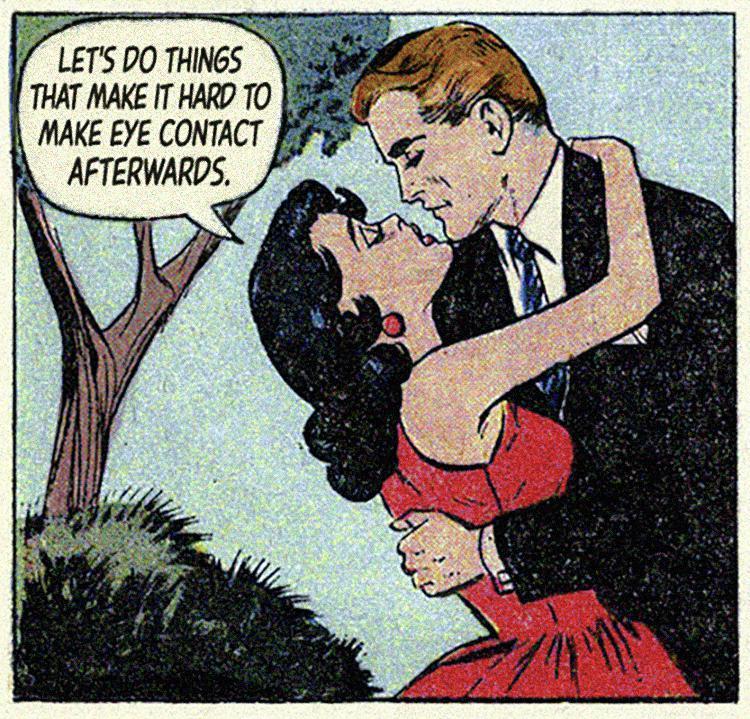
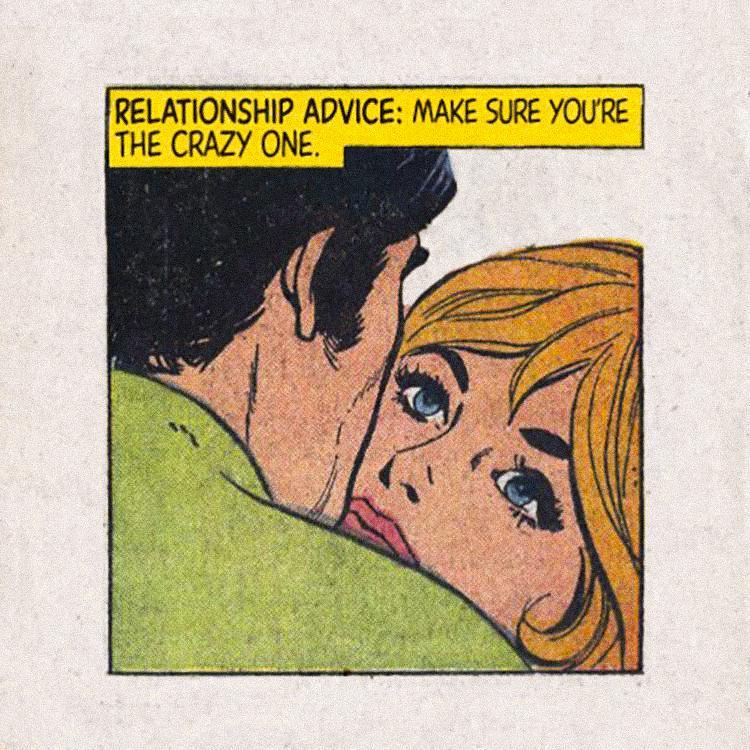
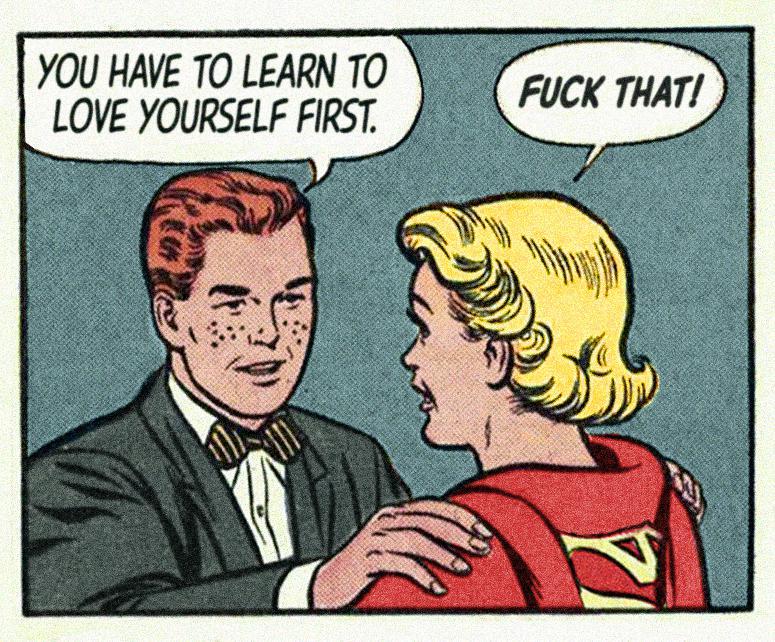
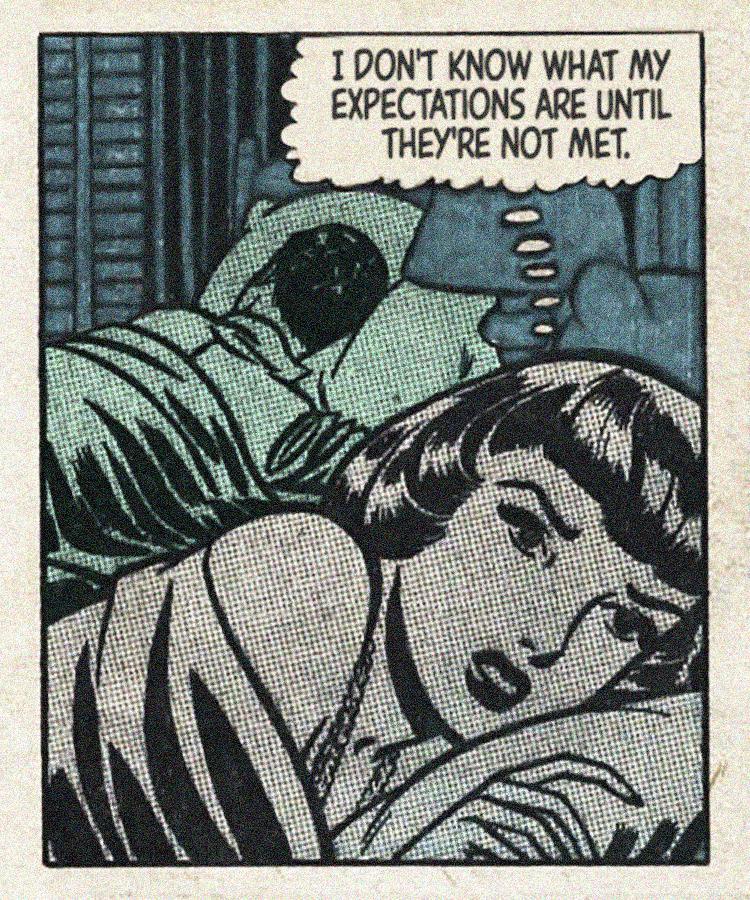
Artist Peter Nidzgorski adds suggested phrases to old romance comic panels as social commentary. Hilarity ensues.
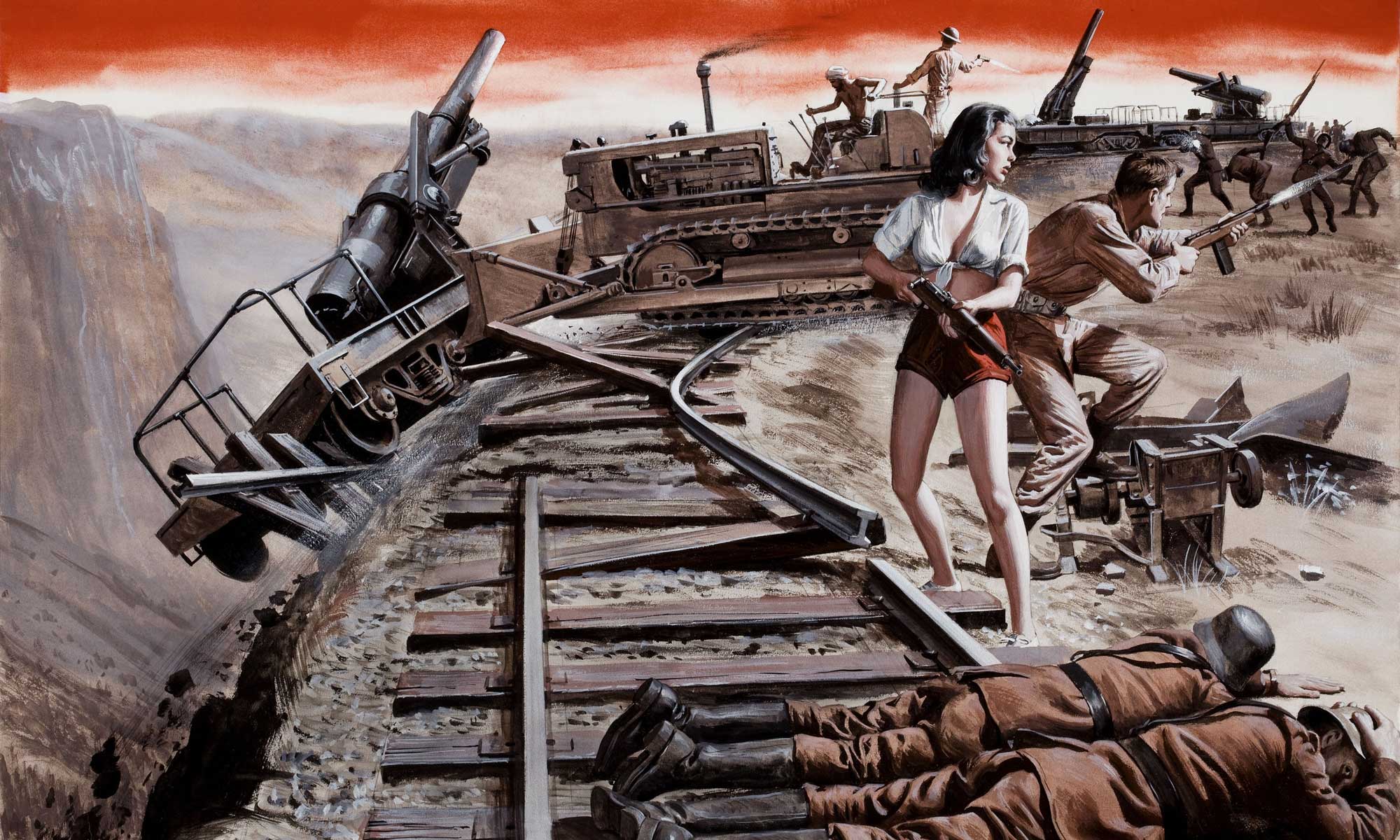
Tales of True Adventure for Rugged Men Not Unlike Yourself
Or is it?
Artist Peter Nidzgorski adds suggested phrases to old romance comic panels as social commentary. Hilarity ensues.
Bob McLeod was another comic artist I admired in the Eighties. I got to meet him at the first Memphis Comic Con, way back in 19 and 82.
He autographed my copy of New Mutants number 1, and somehow refrained from killing my spazzy friend who almost spilled a glass of water on a commissioned piece McLeod was working on at the time.
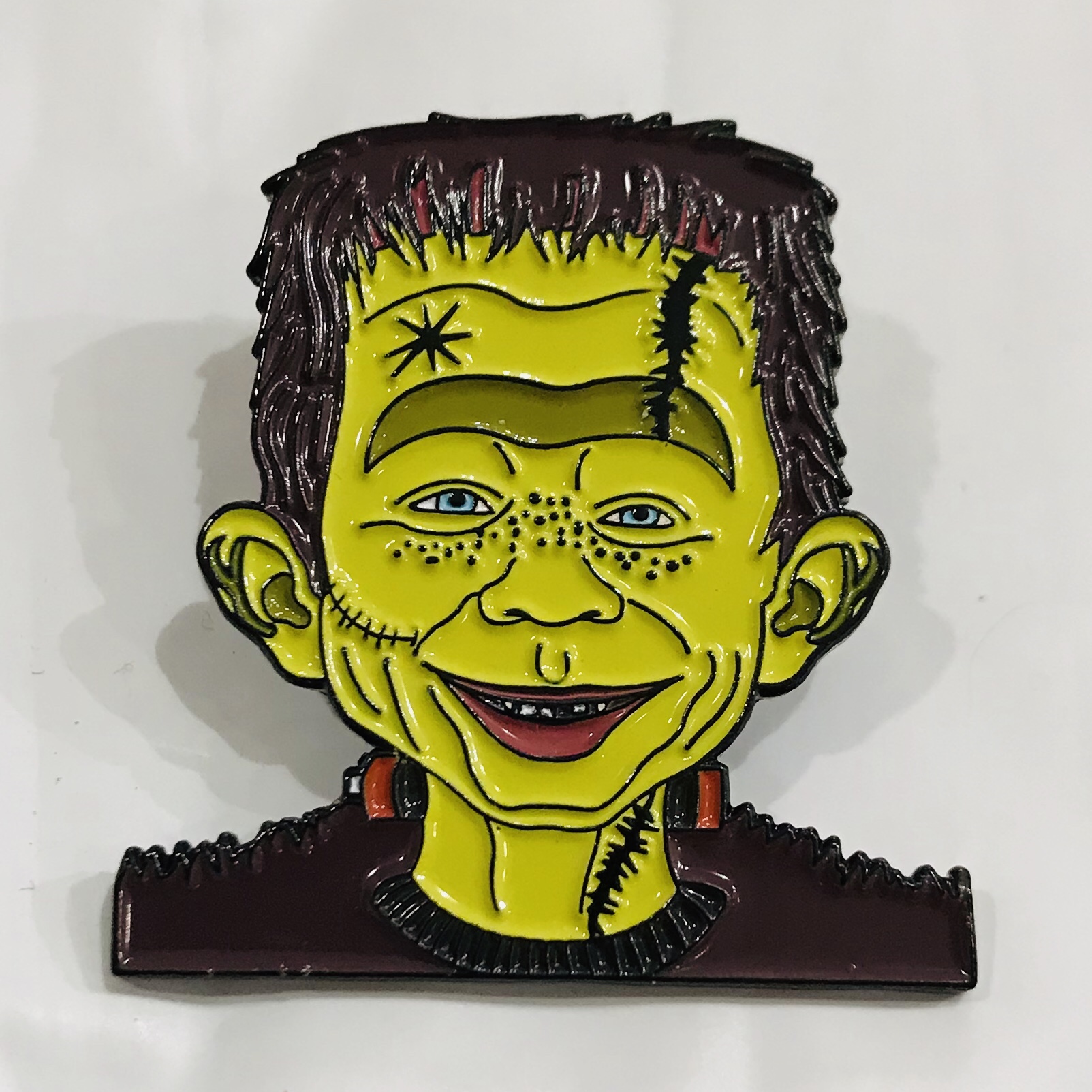
Whichever one of you bastards sent this, I appreciate it.
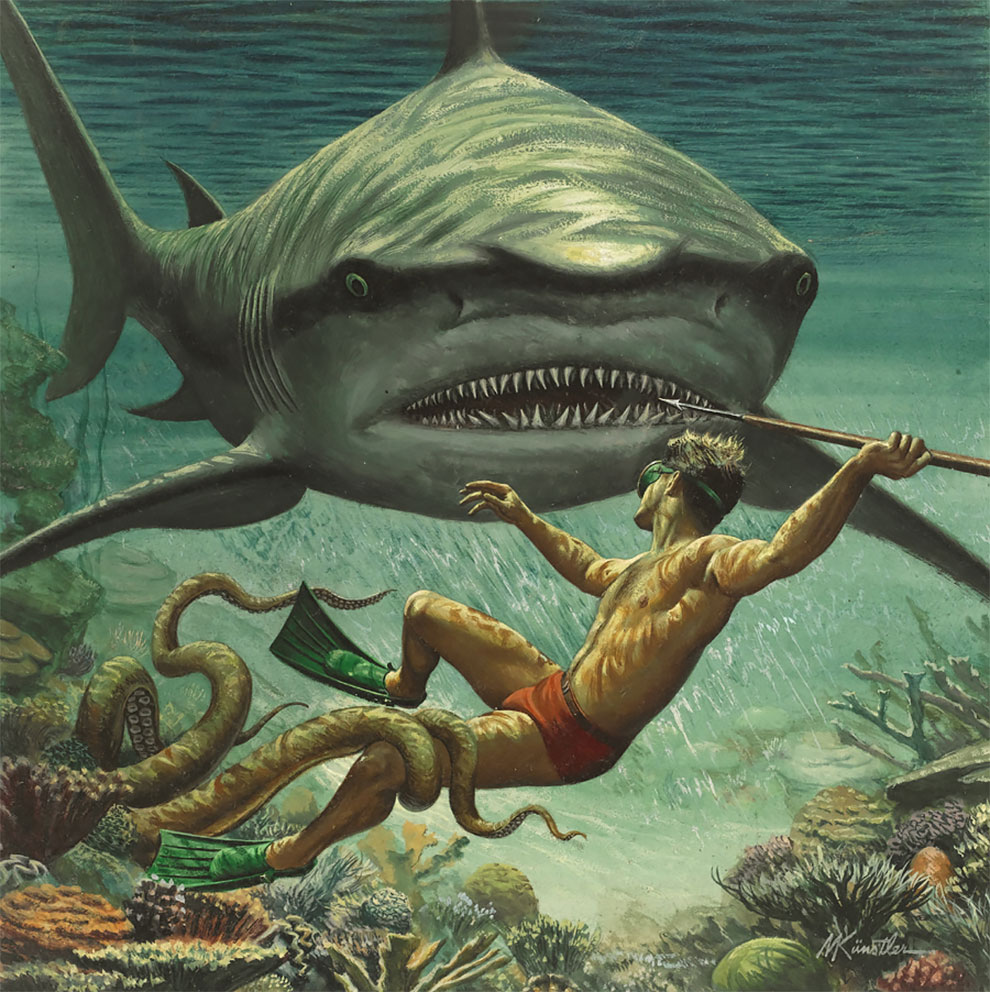
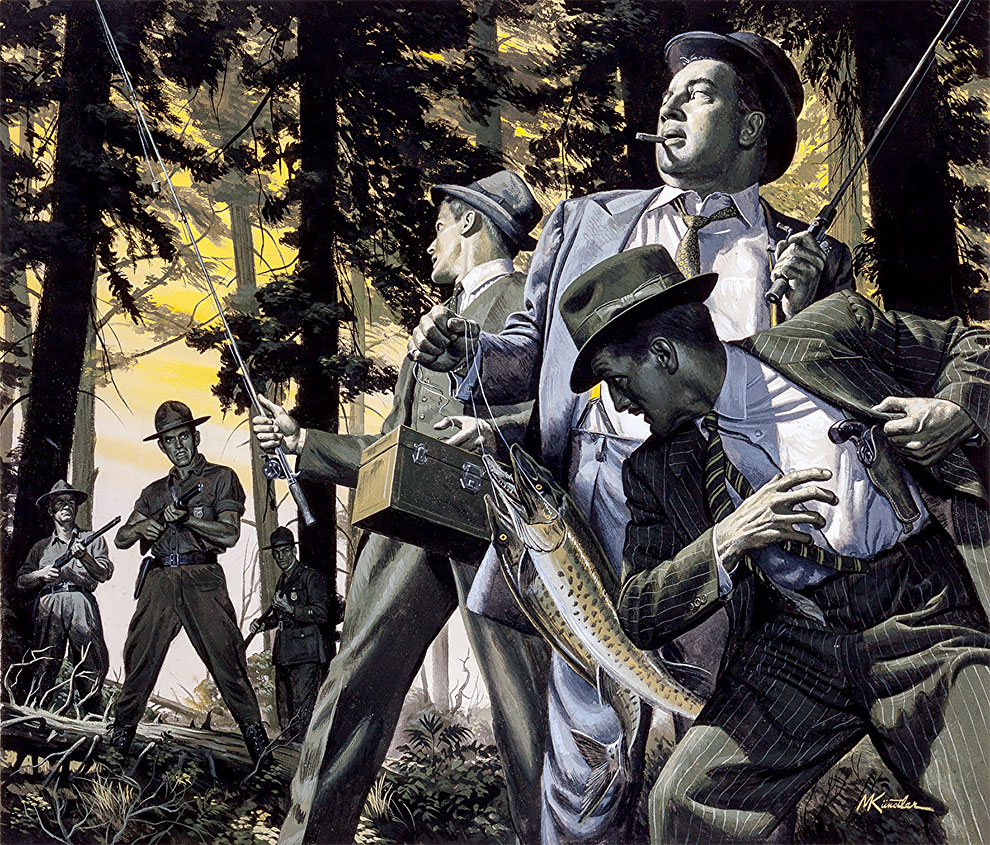
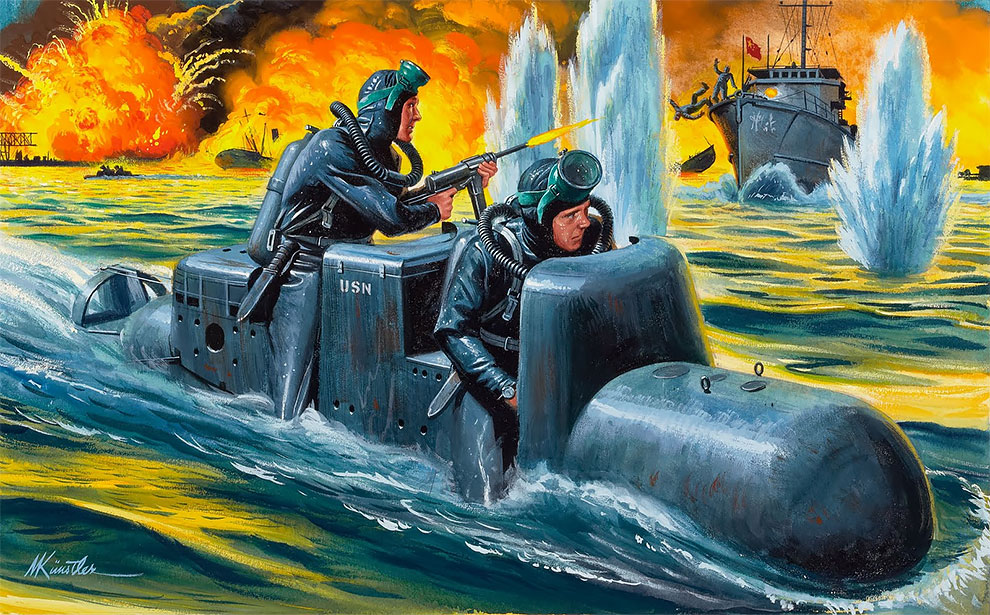
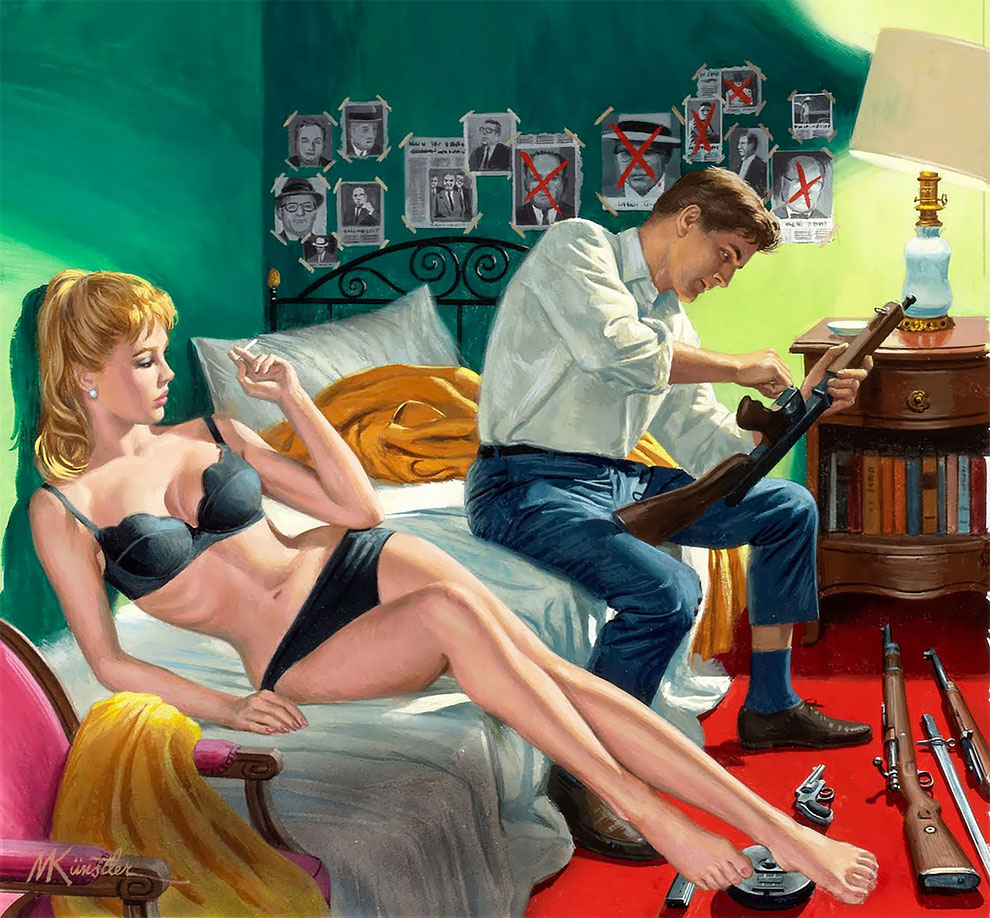
Here’s some more incredibly manly paintings for you rugged bastards!
From Design You Can Trust …
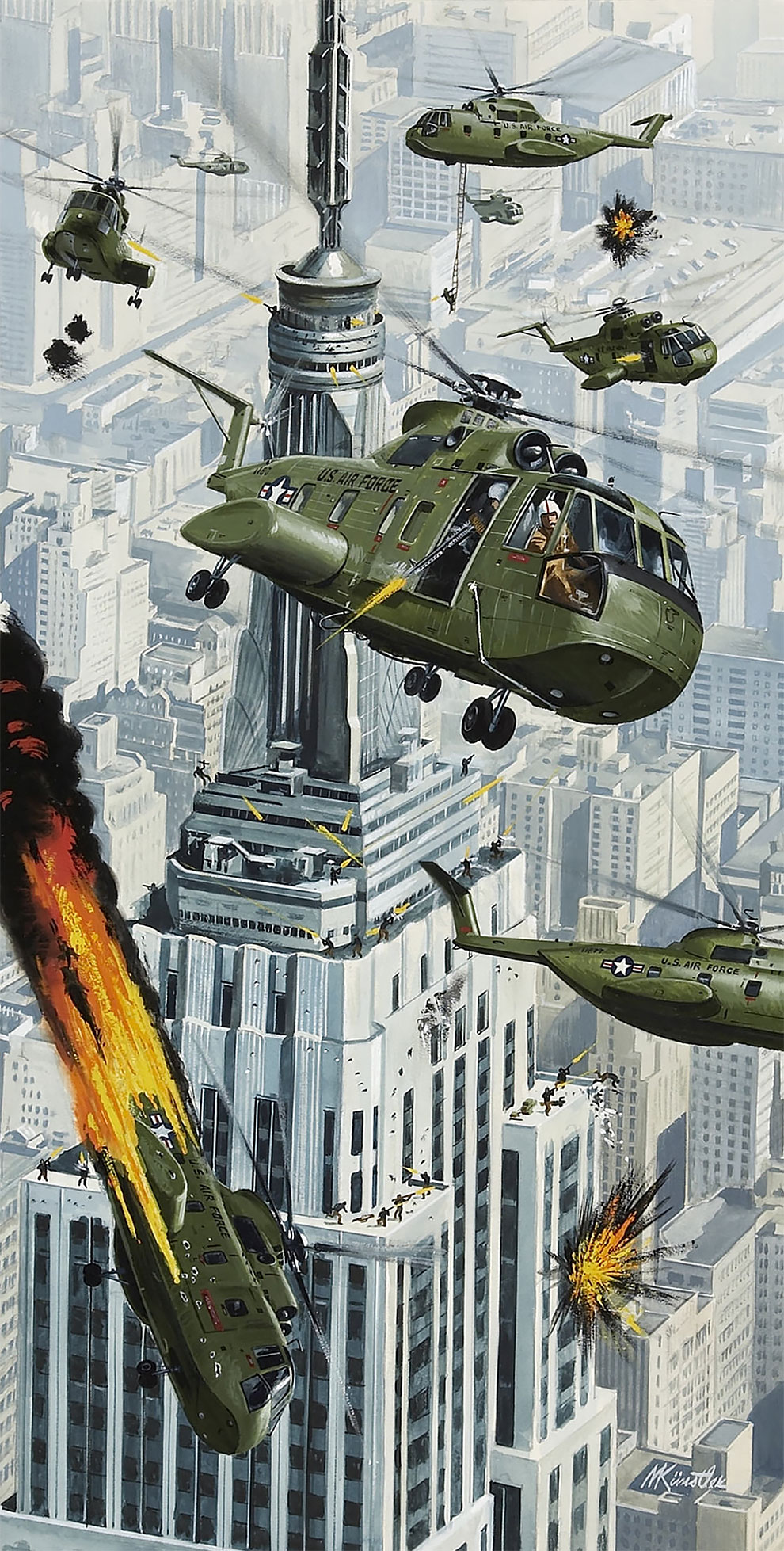
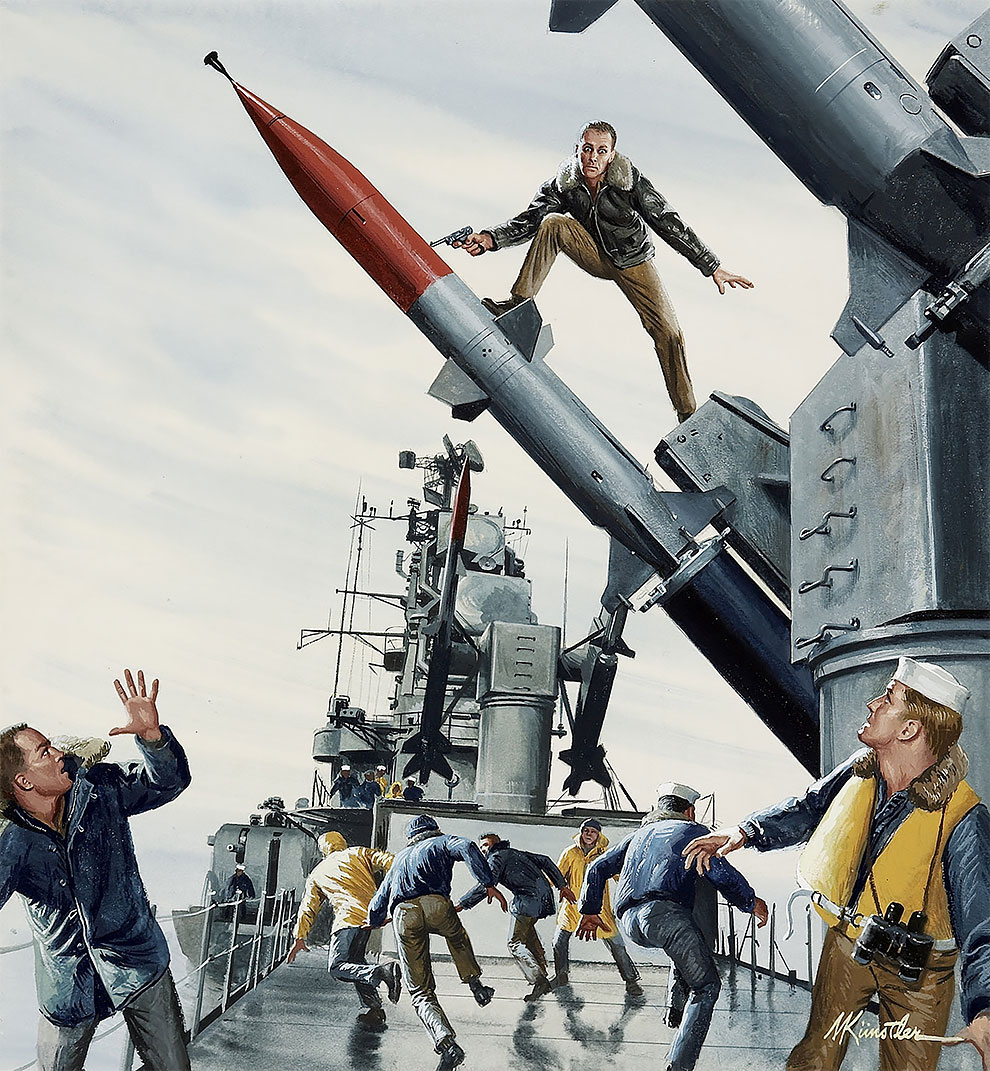
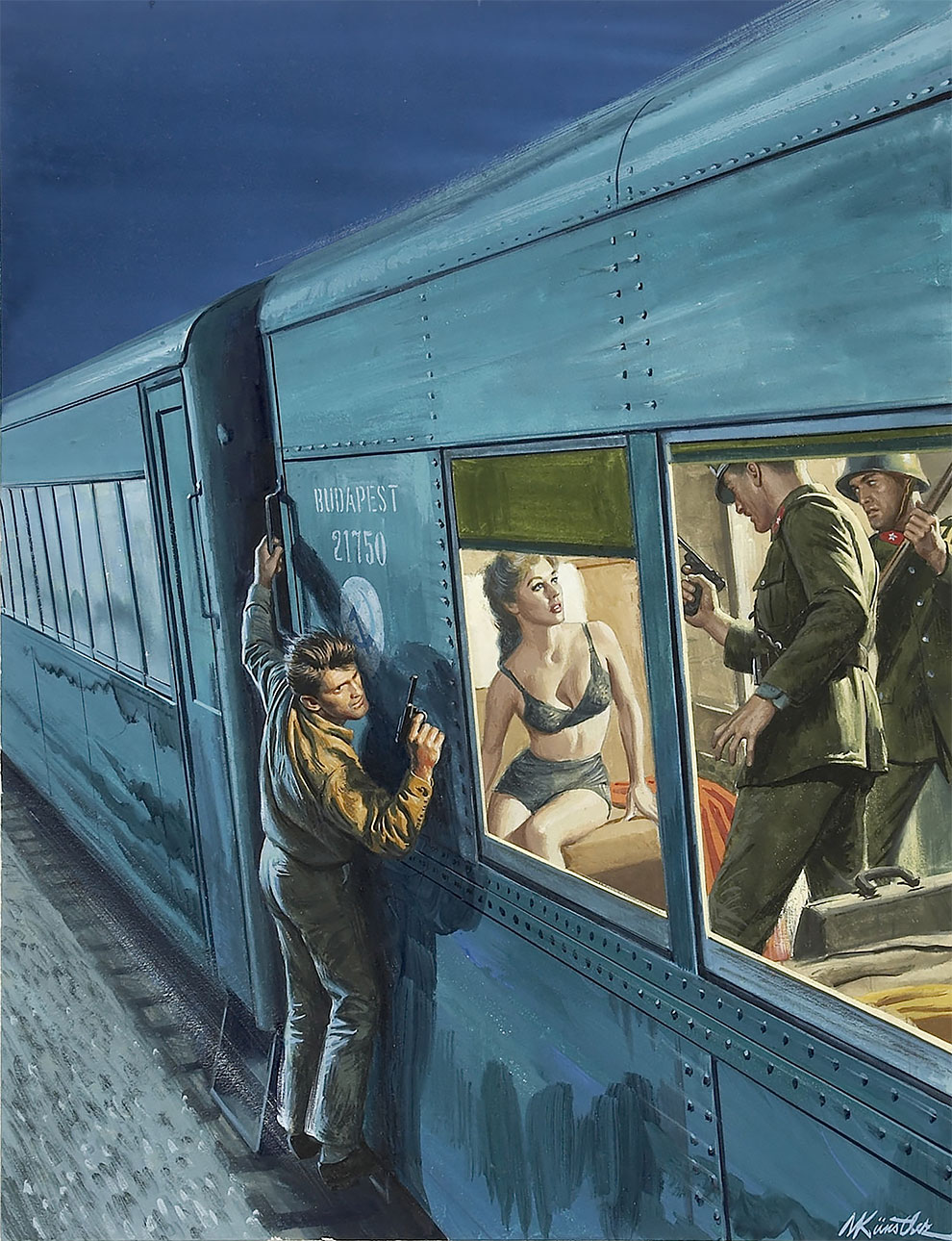
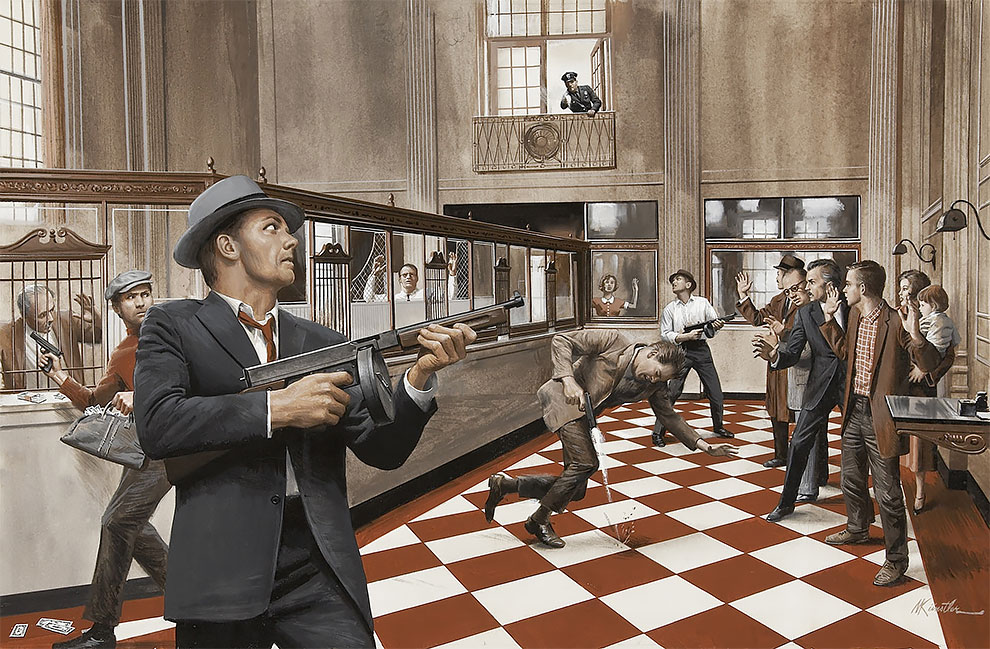
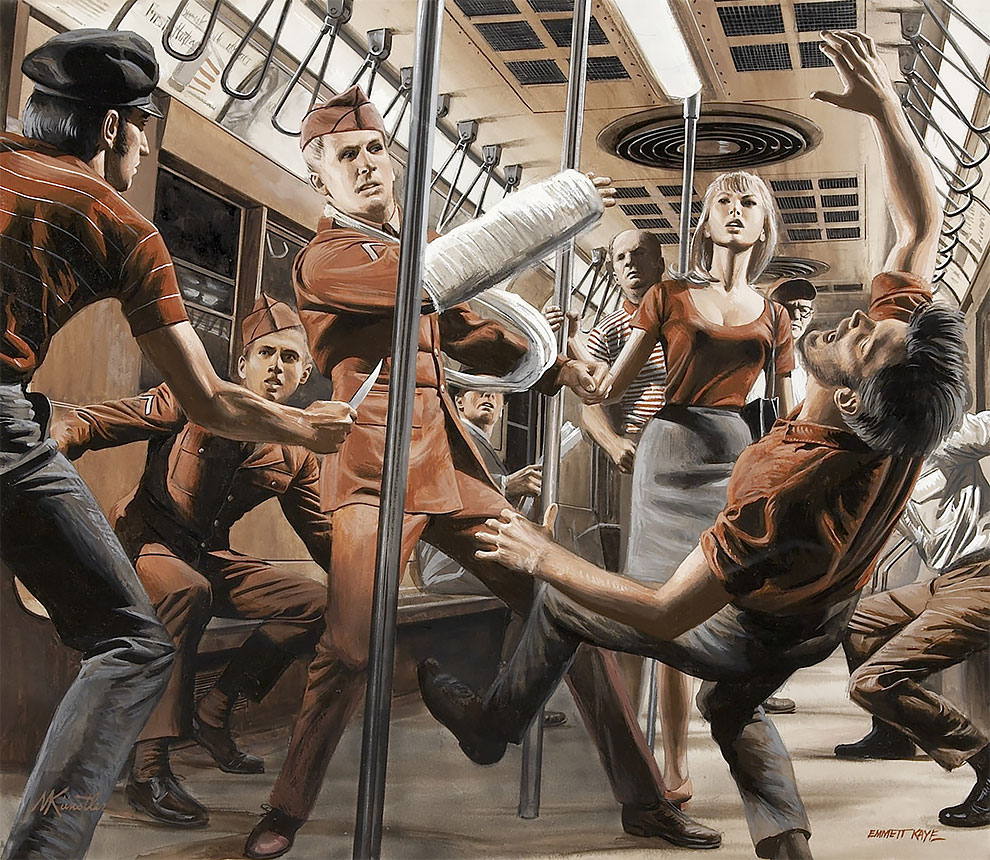
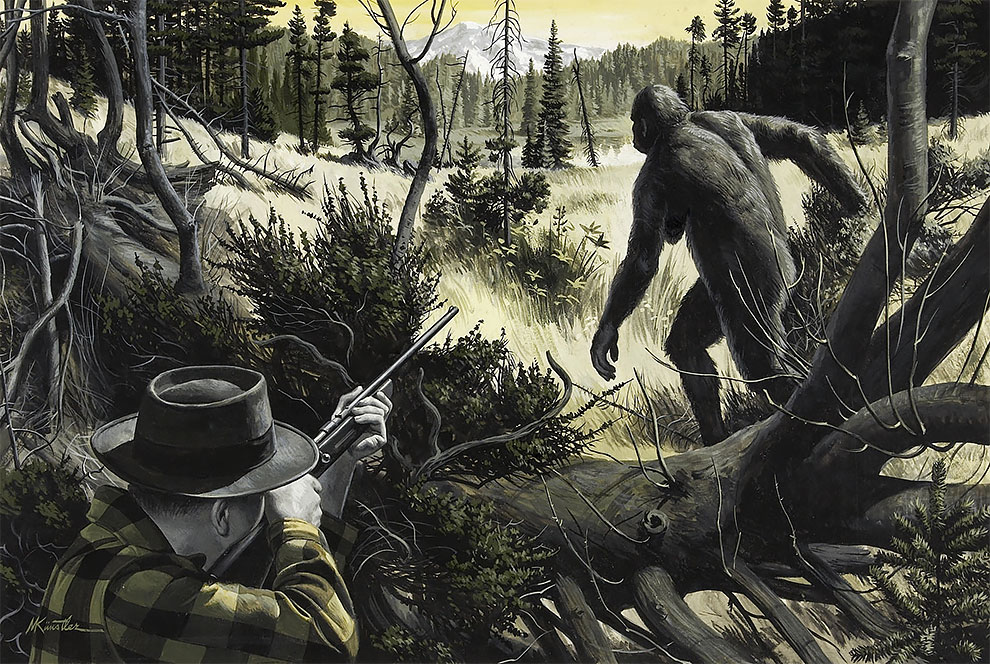
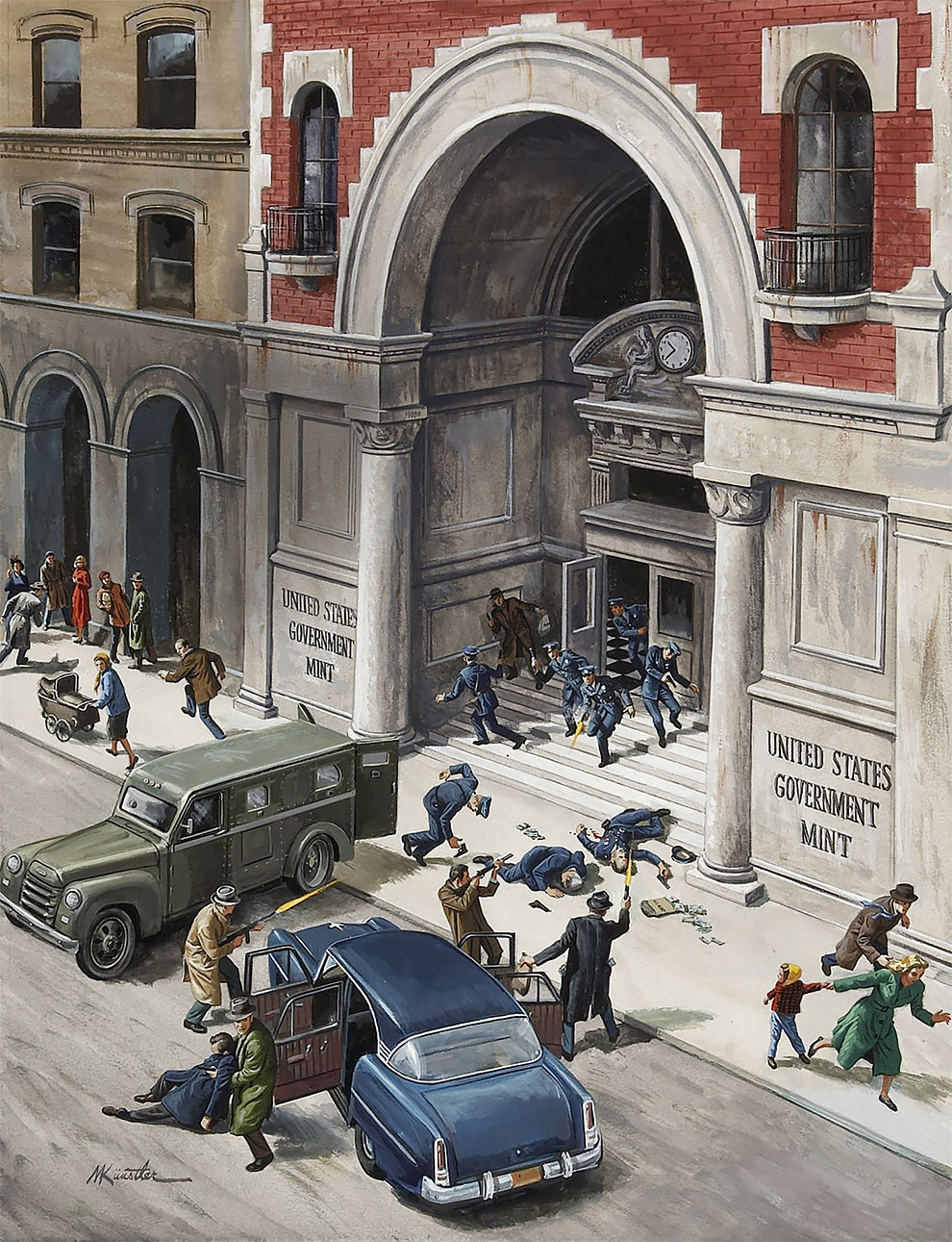
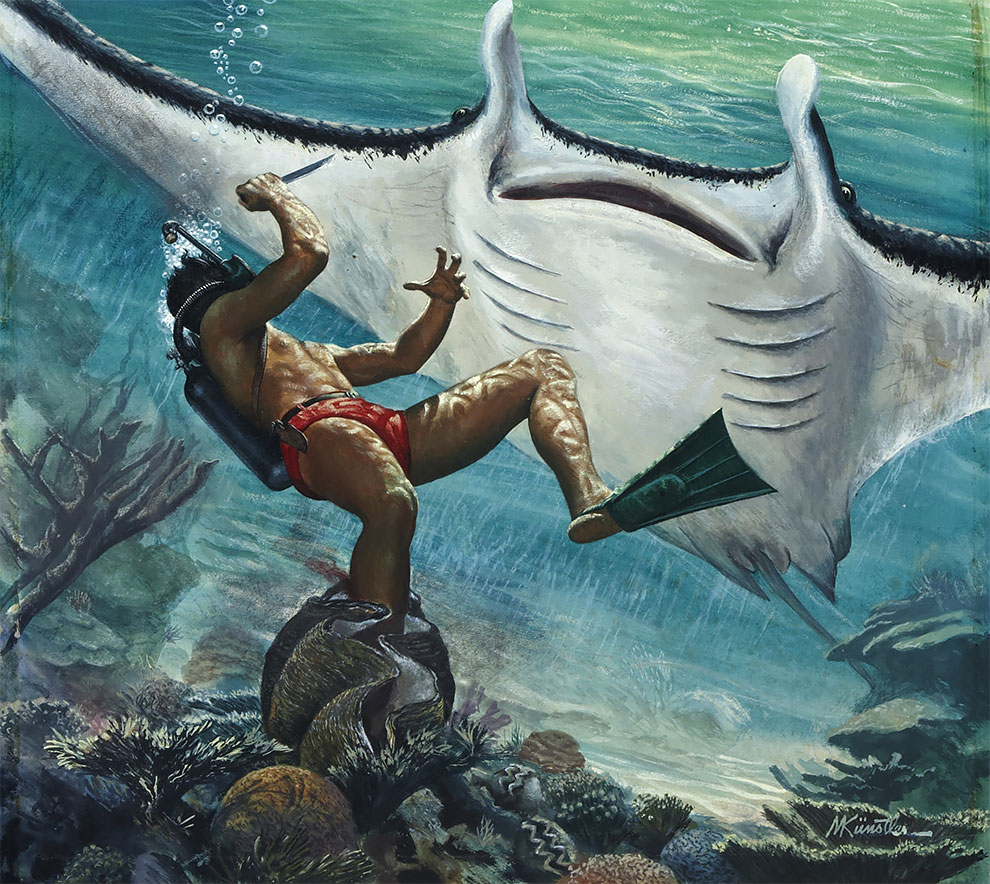
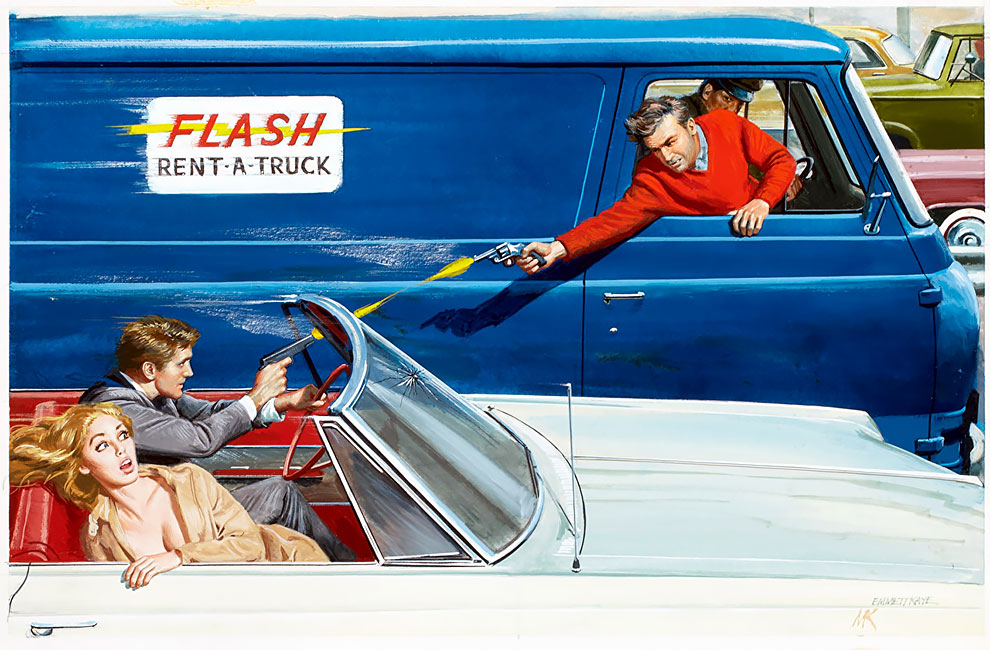
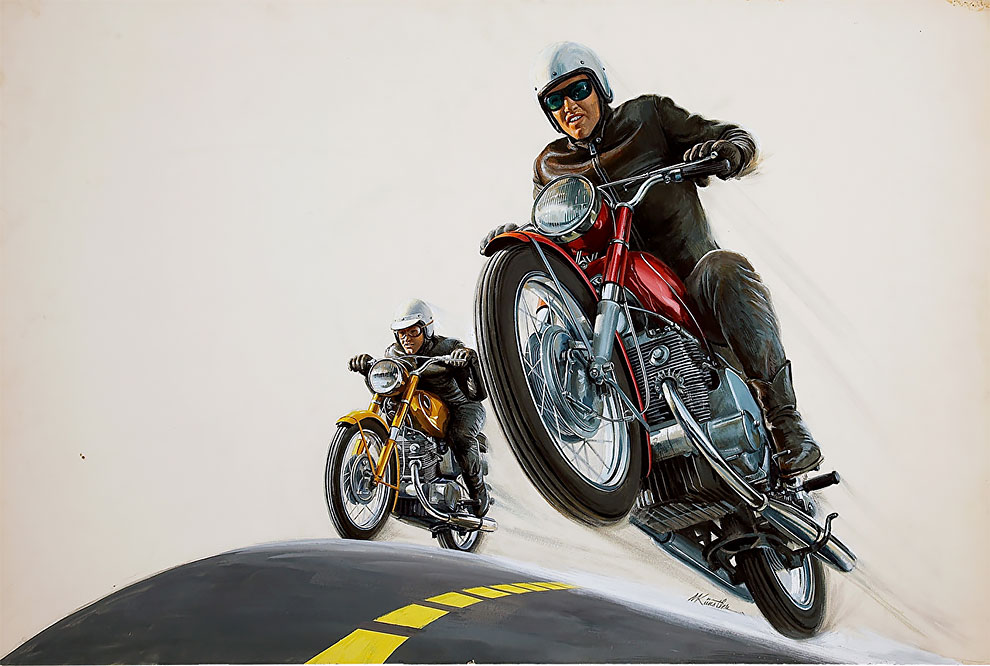
Mort Künstler is best known today for his vivid paintings of scenes from American history, specifically the Revolutionary War and the Civil War. These works have been featured in books and calendars, and spotlighted in exhibitions around the country.
Less known is Künstler’s early work in men’s adventure magazines, a unique genre that populated newsstands from the 1950s through the late ‘70s. Also known as “men’s sweats,” because most covers featured a sweaty, shirtless guy facing some type of peril, scores of adventure titles vied for a reader’s attention with eye-popping headlines such as “Death Orgy of the Leopard Women” and “Weasels Ripped My Flesh!”
I’ll never buy a Rolex Submariner either, but not for the reason he describes.
For comparison, here’s the one I did buy …
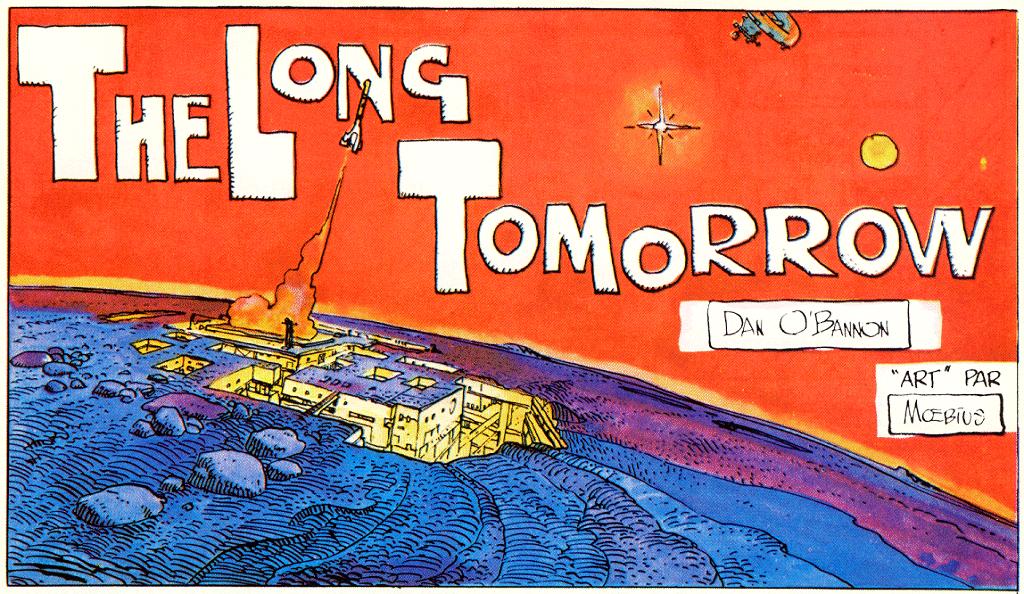
Besides creating a shitload of brain-melting comics, Moebius (Jean Giraud) contributed storyboards and concept designs to numerous science fiction and fantasy films, including Alien, Tron, The Fifth Element and The Abyss. I’ve been on a big Moebius kick lately, and I’ve settled on “The Long Tomorrow” to share with you bastards.
According to the man himself …
I drew “The Long Tomorrow” in 1975, while I worked with Alexandro Jodorowsky on a film adaption of “Dune.” Originally Douglas Trumbull was to do the special effects, but that was not to be so Jodorowsky hired Dan O’Bannon to replace him. Dan came to Paris. Bearded, dressed in a wild style, the typical Californian post-hippie. His real work would begin at the time of shooting, on the models, on the hardware props. As we were still in the stage of preparations and concepts, there was almost nothing to do and he was bored stiff. To kill time, he drew. Dan is best known as a script writer, but is an excellent cartoonist. If he had wished, he could have been a professional graphic artist. One day, he showed me what he was drawing. It was the story board of “The Long Tomorrow.” A classic police story, but situated in the future. I was enthusiastic. When Europeans try this kind of parody, it is never entirely satisfactory, the French are too French, the Italians are too Italian … so, under my nose was a pastiche that was more original than the originals. A believer in parody, Dan continued that tradition. As the story was very strong, I immediately asked if he would allow me to play around graphically, with complete freedom, without conventional pyrotechnics, to refocus on the floating point of view. Pete Club’s costume, for example, was almost ridiculous, far from the traditional raincoat of Bogart. It was the same for most of the visual elements. I scrupulously followed Dan’s story. One day I wish we could publish our two versions side by side. As the strip has pleased everyone, I asked Dan about a sequel, but it did not get his attention, so was simply an adventure I never designed.
This story heavily influenced everyone from writer William Gibson (Neuromancer) to Ridley Scott (Blade Runner) to George Lucas (Empire Strikes Back). If the launchpad sentinel looks familiar to Star Wars fans, it’s because Lucas lifted its design in toto for the probe droid. O’Bannon did a ton of stuff later on, but is perhaps best-known for writing Alien and directing Return of the Living Dead.
Okay, so I have a John Byrne obsession, so what? He’s still got some pretty cool shit in his studio …
John Lindley Byrne (/bɜːrn/; born July 6, 1950) is a British-born, Canadian raised, American writer and artist of superhero comics. Since the mid-1970s, Byrne has worked on many major superheroes, with noted work on Marvel Comics’ X-Men and Fantastic Four and the 1986 relaunch of DC Comics’ Superman franchise, the first issue of which featured comics’ first variant cover. Coming into the comics profession as penciller, inker, letterer and writer on his earliest work, Byrne began co-plotting the X-Men comics during his tenure on them, and launched his writing career in earnest with Fantastic Four (where he also served as penciler and inker). During the 1990s he produced a number of creator-owned works, including Next Men and Danger Unlimited. He scripted the first issues of Mike Mignola’s Hellboy series and produced a number of Star Trek comics for IDW Publishing. In 2015, Byrne and his X-Men collaborator Chris Claremont were entered into the Will Eisner Award Hall of Fame.
Fascinating and sad.
According to the Oxford American …
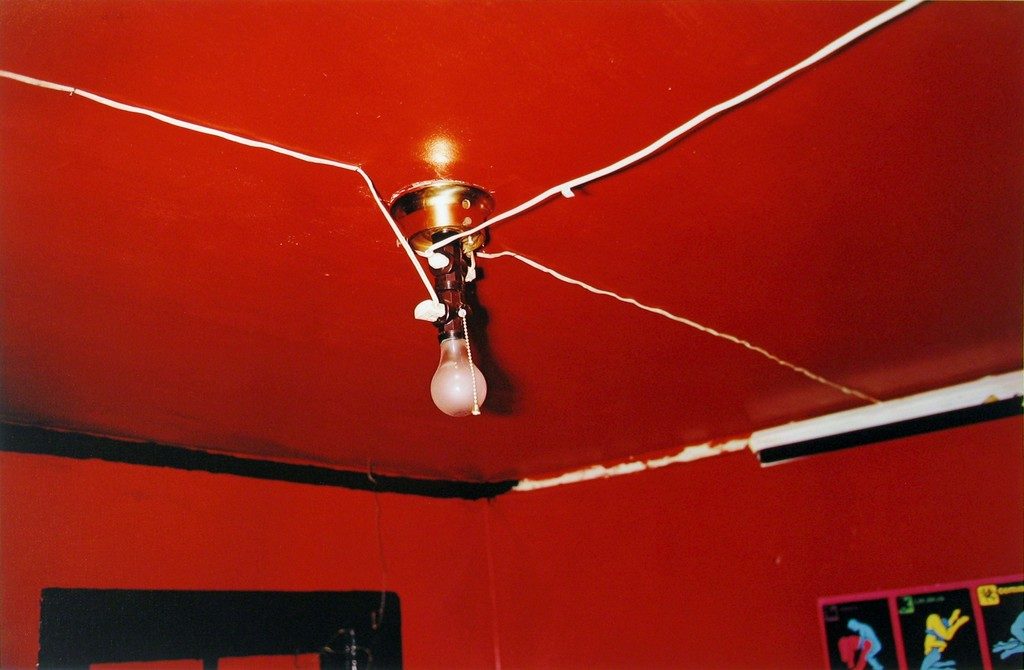
The house in the photograph belonged to a man named Tom “T. C.” Boring, a dentist born and raised in Greenwood, whom Eggleston has described as the best friend he ever had in the world. He was the scion of a well-respected Delta family, a sharp and promising Southern archetype who glided his way through the University of Mississippi, Loyola University, and the Navy before coming home to Greenwood and gradually, ungracefully losing his mind.
Full article here. As always, enjoy or don’t.
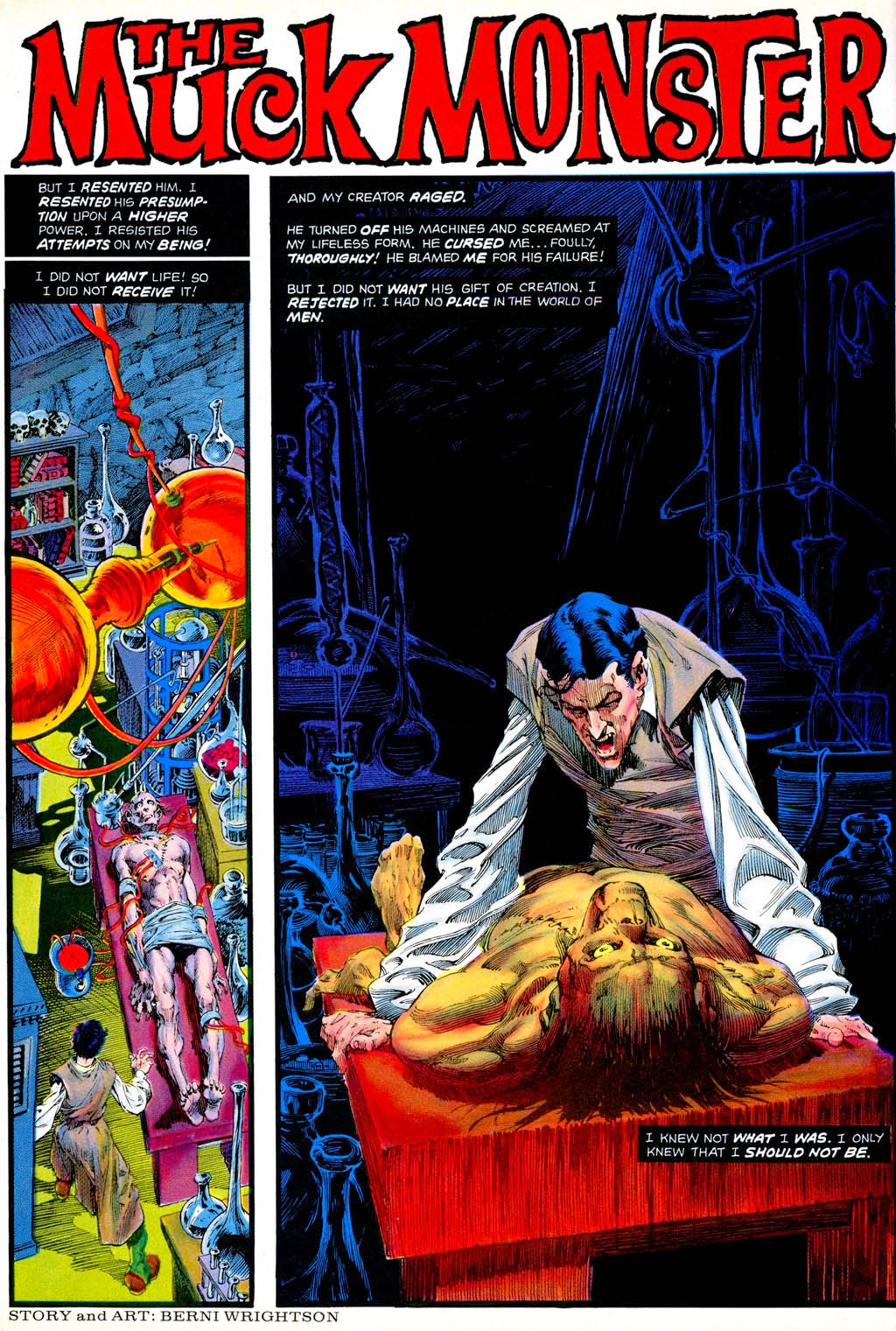
When I was a kid, my mom would take me grocery shopping. I would practically run to the magazine stand and then she’d collect me after check out. What she still doesn’t know is that I read TONS of inappropriate shit, from Creepy to Creem and whatever else you can think of. On one of those trips, I came across this story. Me being me, it had a profound effect. Unfortunately, I could never track down a copy as an adult, not knowing the artist, story name, or publication. Occasionally, I would ask other horror fans about it, but no one ever knew what I was talking about.
Of course, after I gave up looking, I accidentally found it online. According to some comic historian with a blog, “The Muck Monster” was originally published in the September 1975 issue of Eerie (#68) as a color insert. Comix International then reprinted it in October 1975, and then, a few years later in November 1979, it was reprinted in black & white for issue 113 of Creepy. (Which is when I must have initially read it.)
So here it is, pretty much as I remembered it. I uploaded the color version because it’s higher resolution, but the black & white version is much more impactful. I should have guessed Berni Wrightson was the artist and writer.