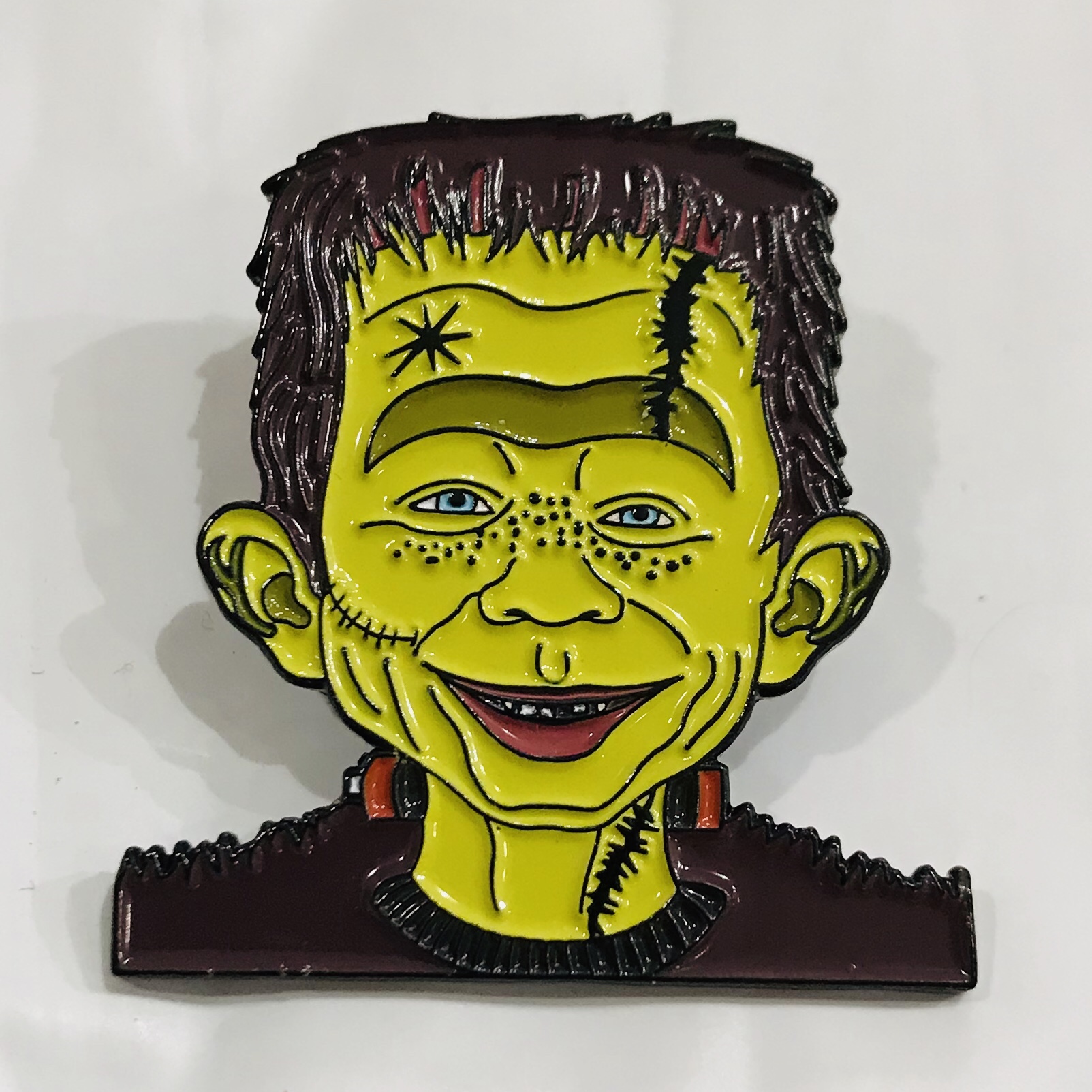
Whichever one of you bastards sent this, I appreciate it.
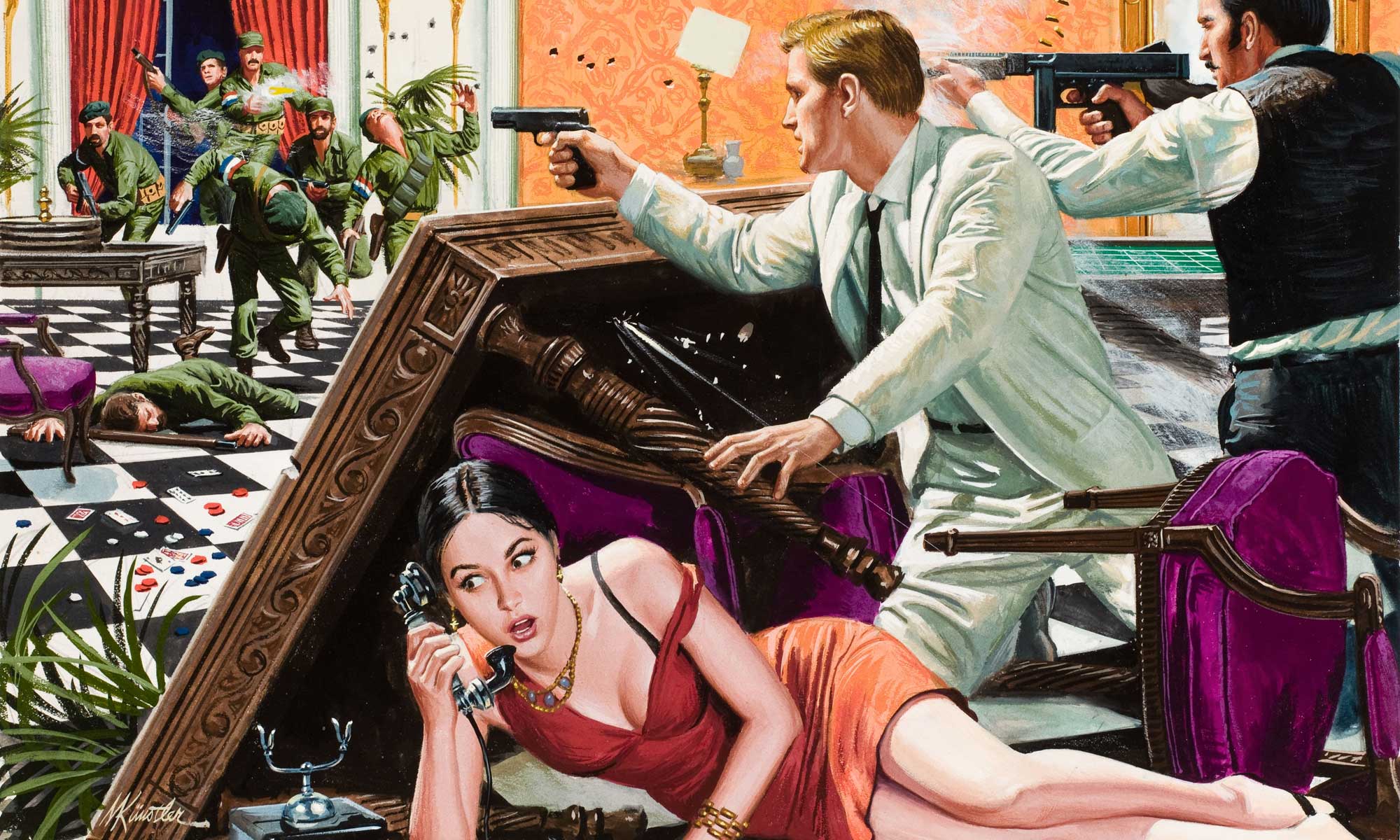
Tales of True Adventure for Rugged Men Not Unlike Yourself
Whichever one of you bastards sent this, I appreciate it.
CBGB, September 15th, 1974. If there’s anything better than this, I don’t want to know what it is. Including the between-song arguments and Tommy bitching about how fast everything is.
1) Now I Wanna Sniff Some Glue
2) I Don’t Wanna Go Down to the Basement
3) Judy Is a Punk
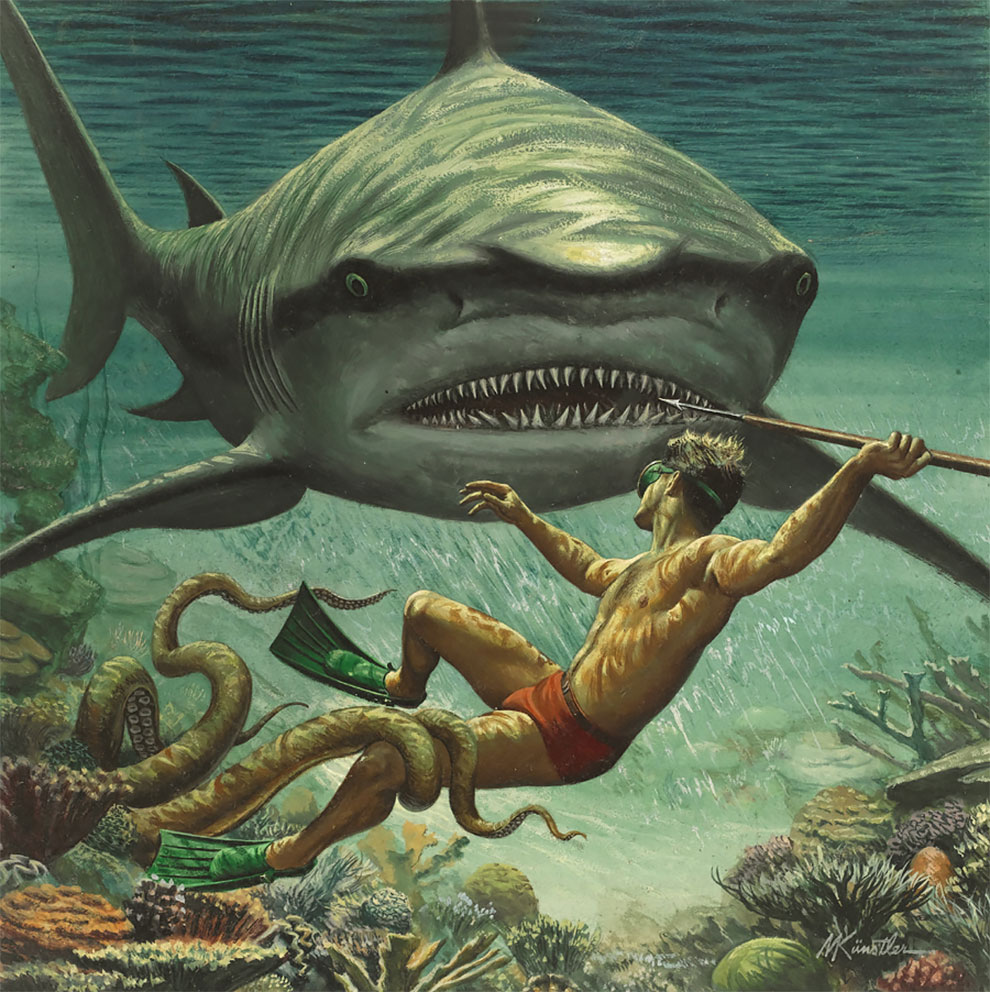
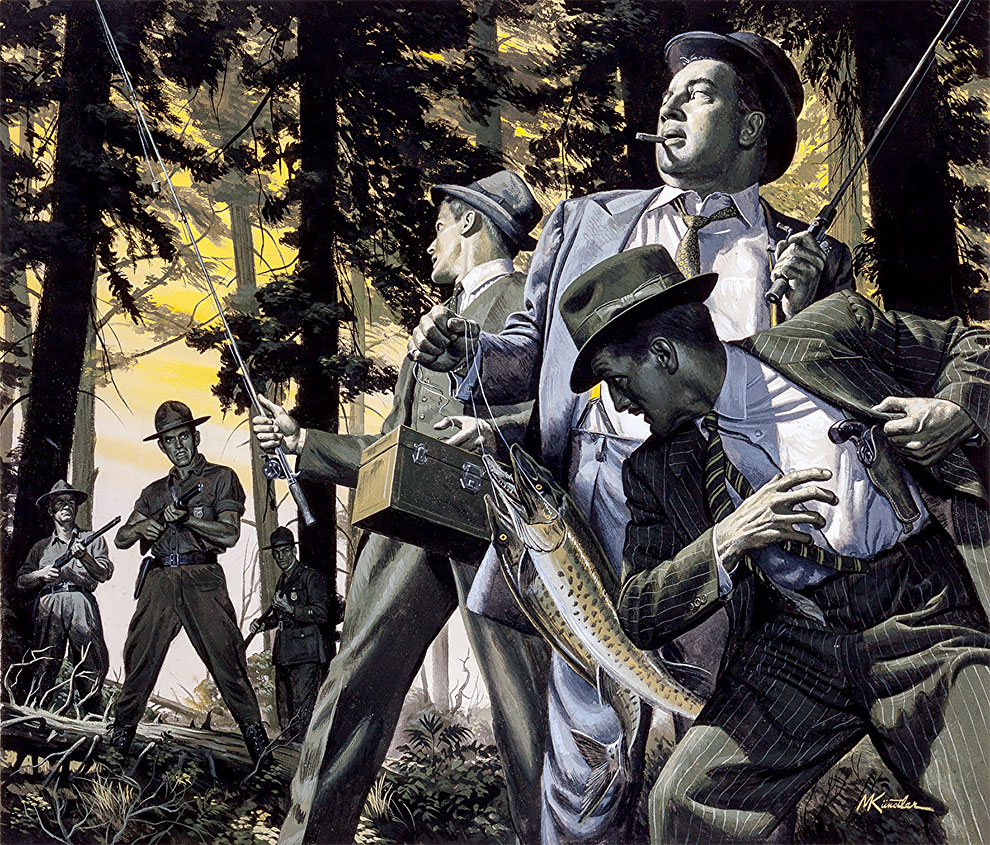
Here’s some more incredibly manly paintings for you rugged bastards!
From Design You Can Trust …
Mort Künstler is best known today for his vivid paintings of scenes from American history, specifically the Revolutionary War and the Civil War. These works have been featured in books and calendars, and spotlighted in exhibitions around the country.
Less known is Künstler’s early work in men’s adventure magazines, a unique genre that populated newsstands from the 1950s through the late ‘70s. Also known as “men’s sweats,” because most covers featured a sweaty, shirtless guy facing some type of peril, scores of adventure titles vied for a reader’s attention with eye-popping headlines such as “Death Orgy of the Leopard Women” and “Weasels Ripped My Flesh!”
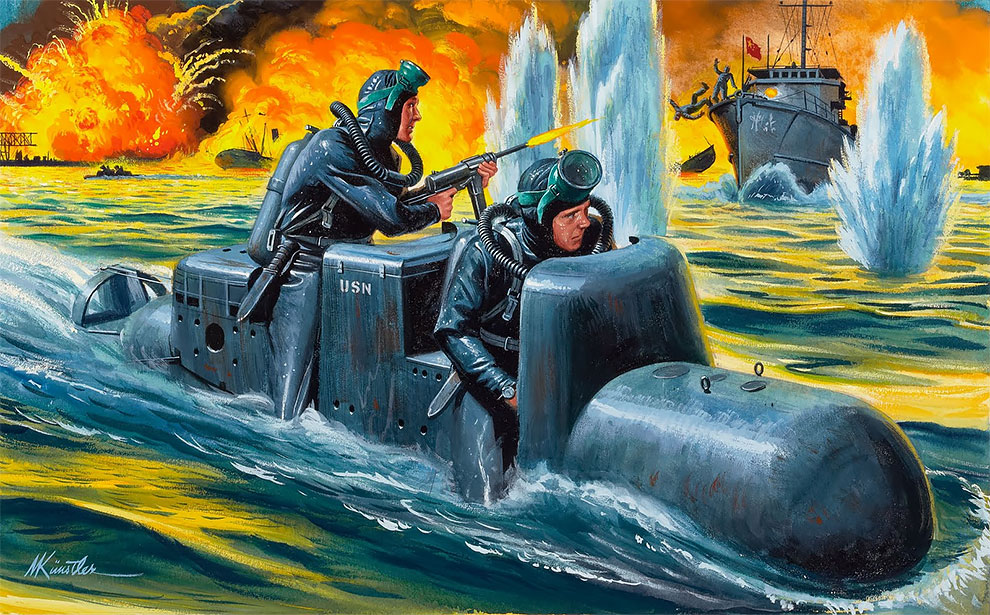
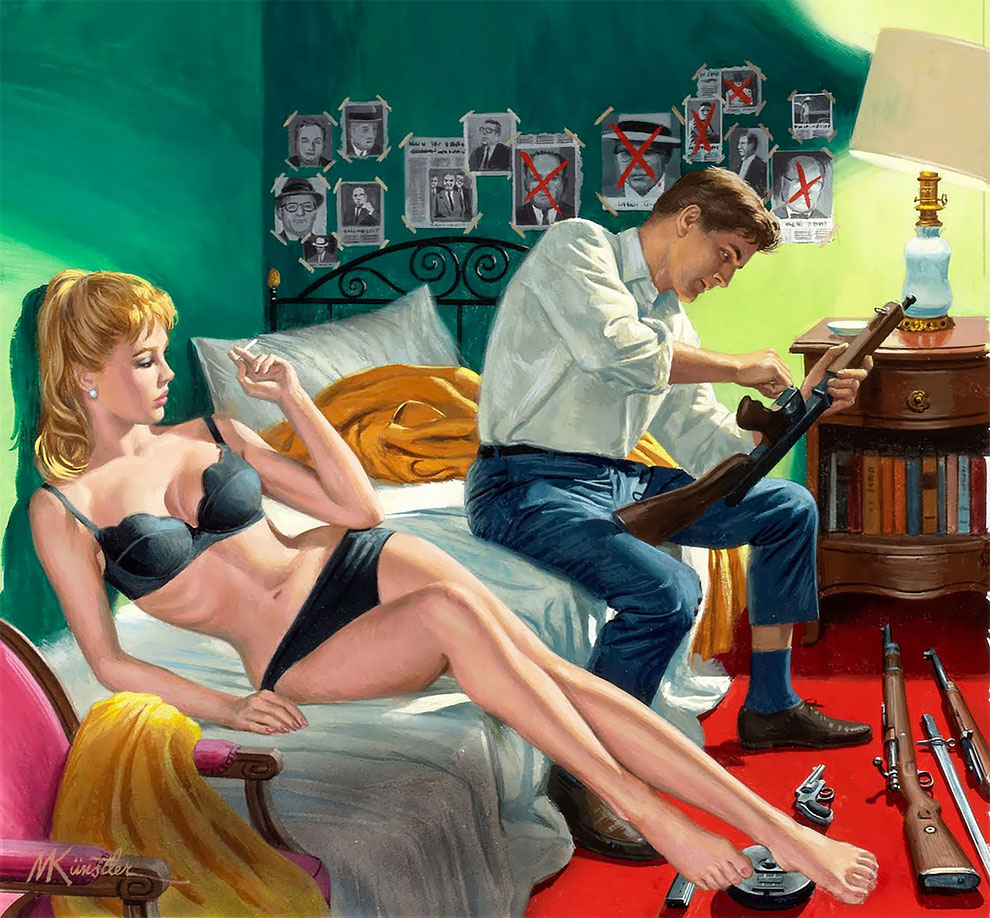
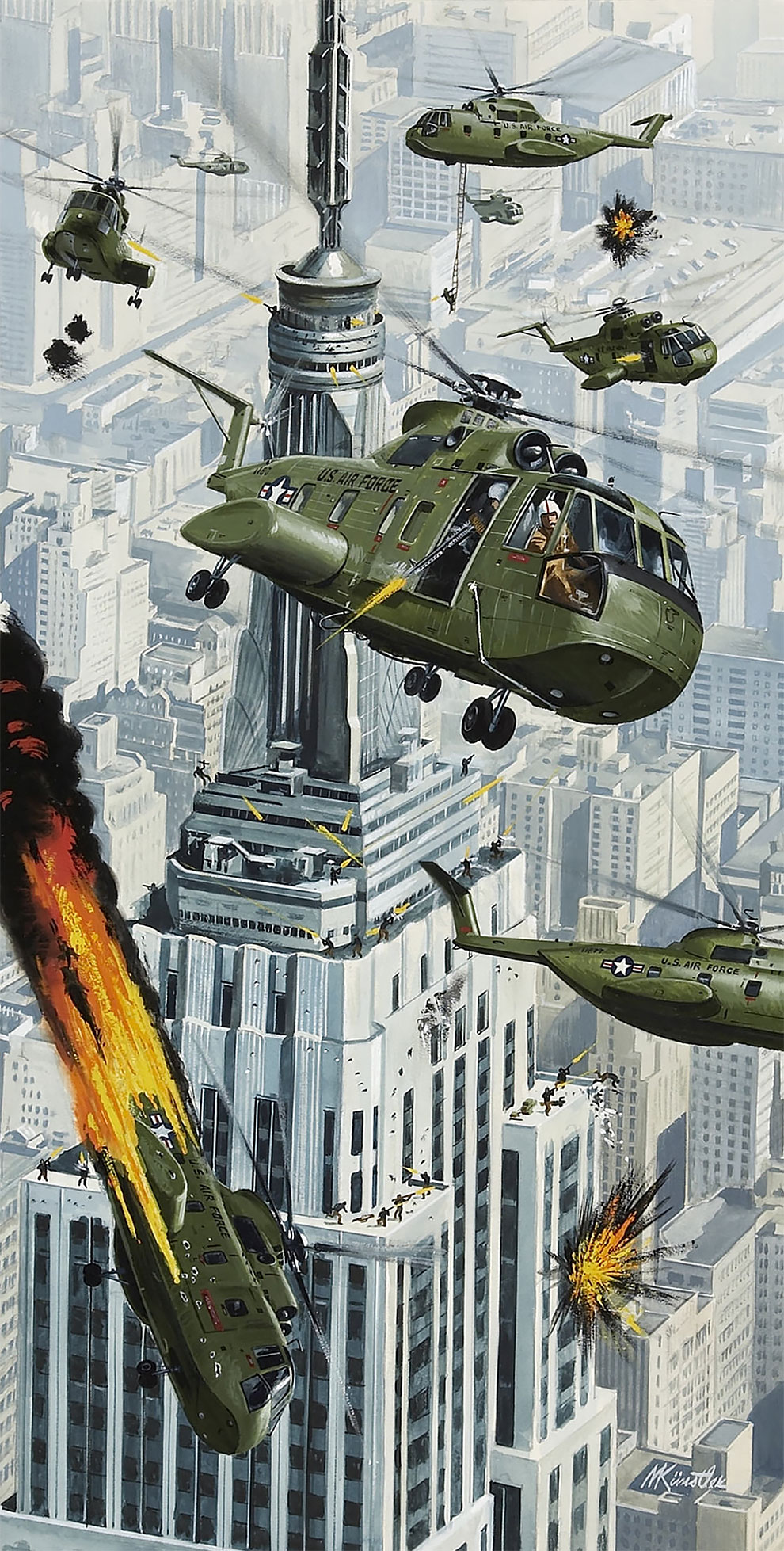
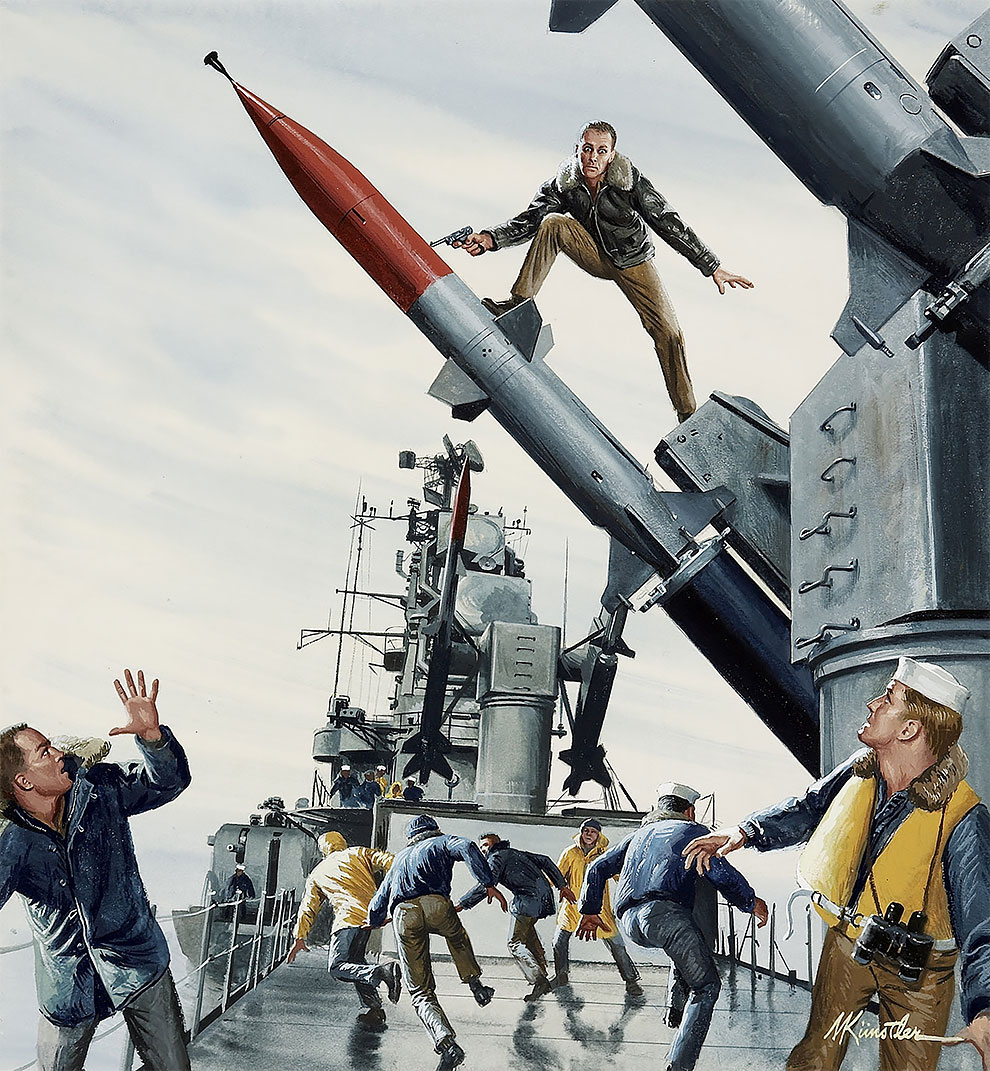
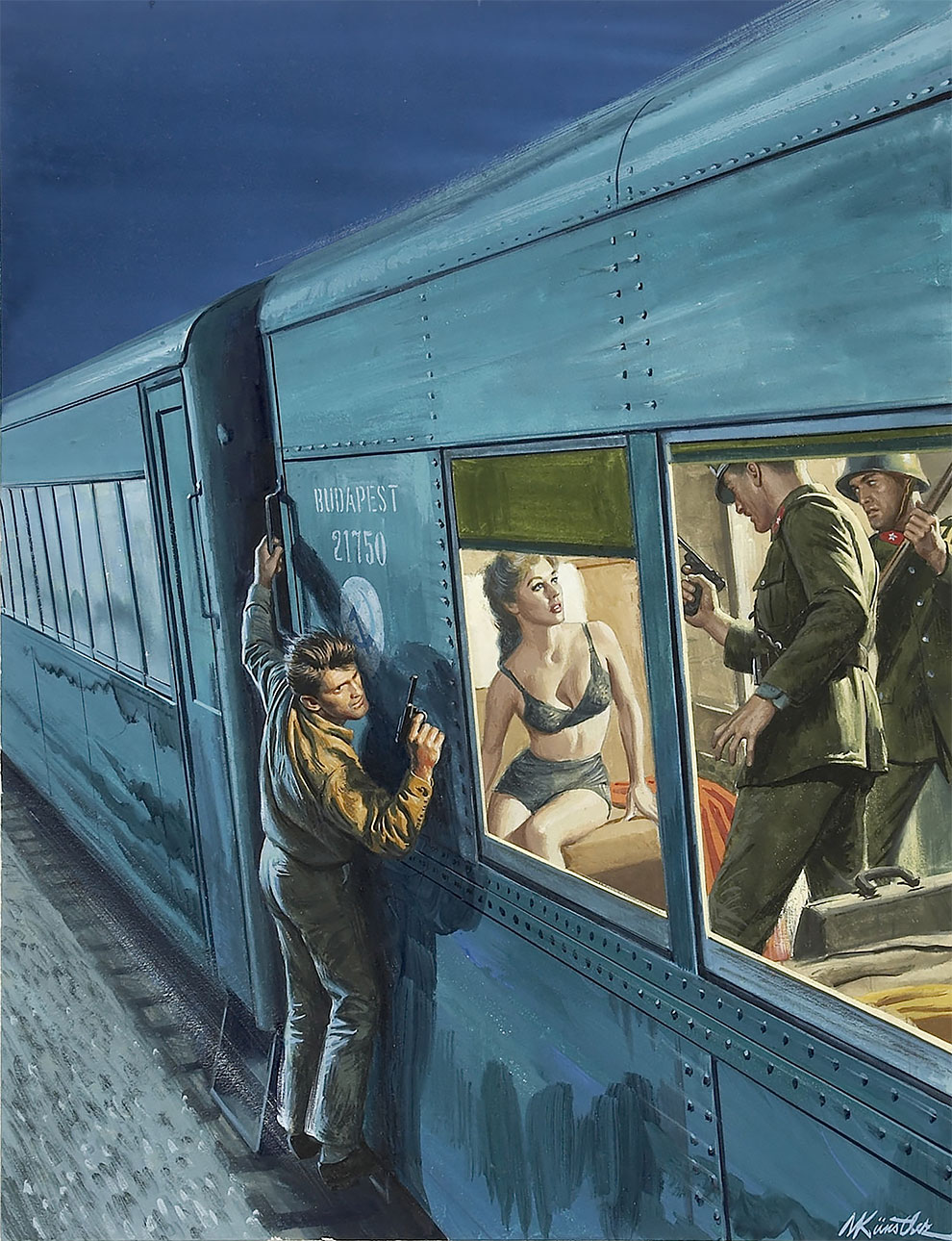
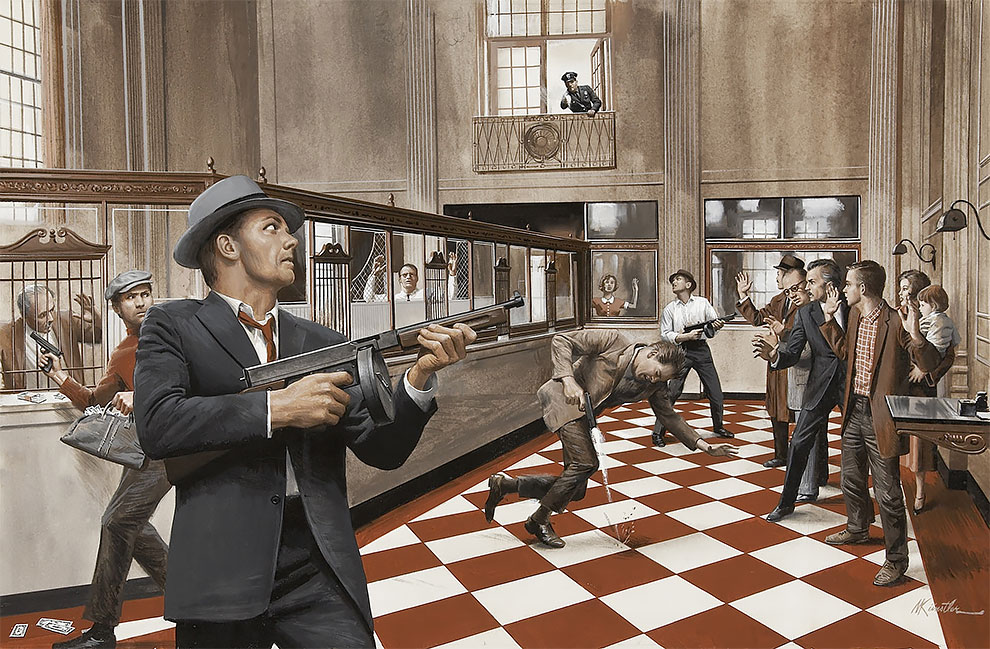
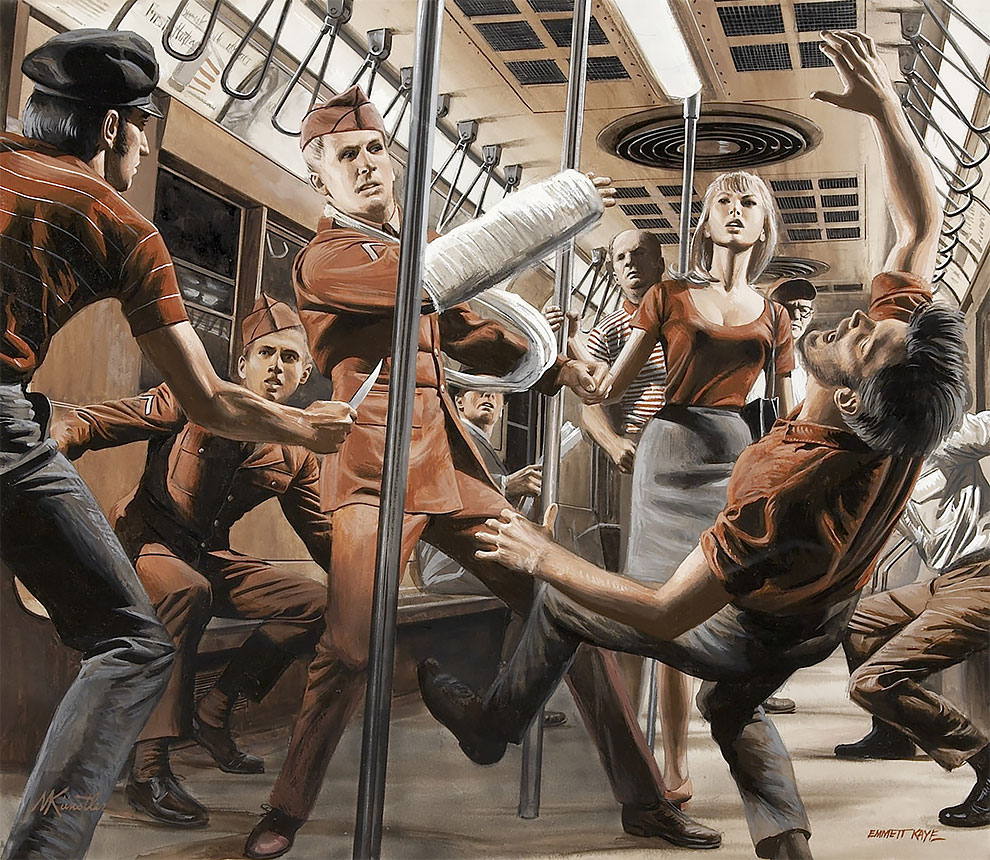
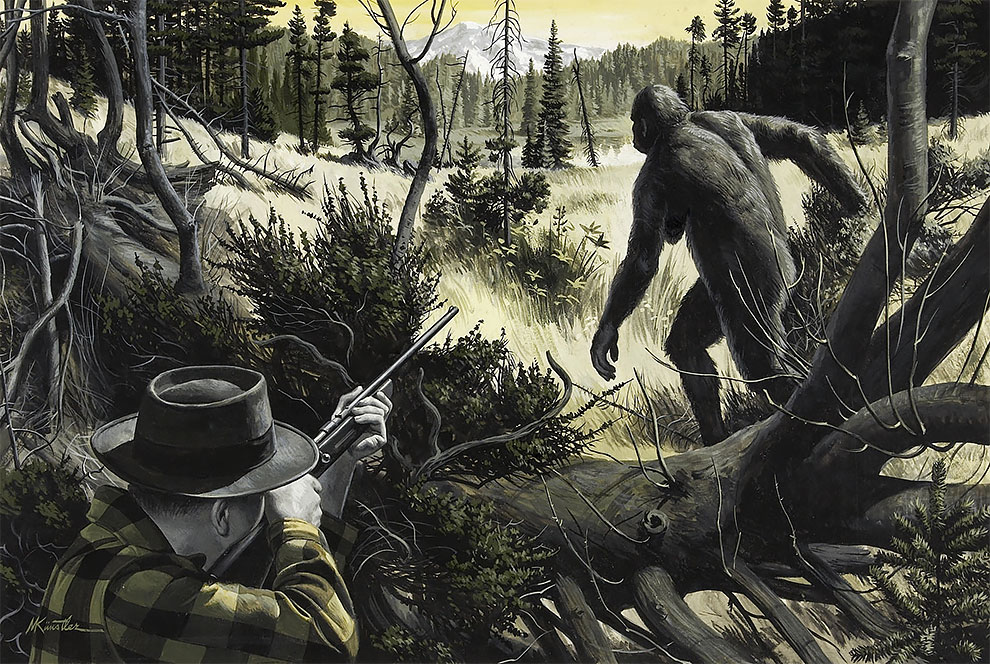
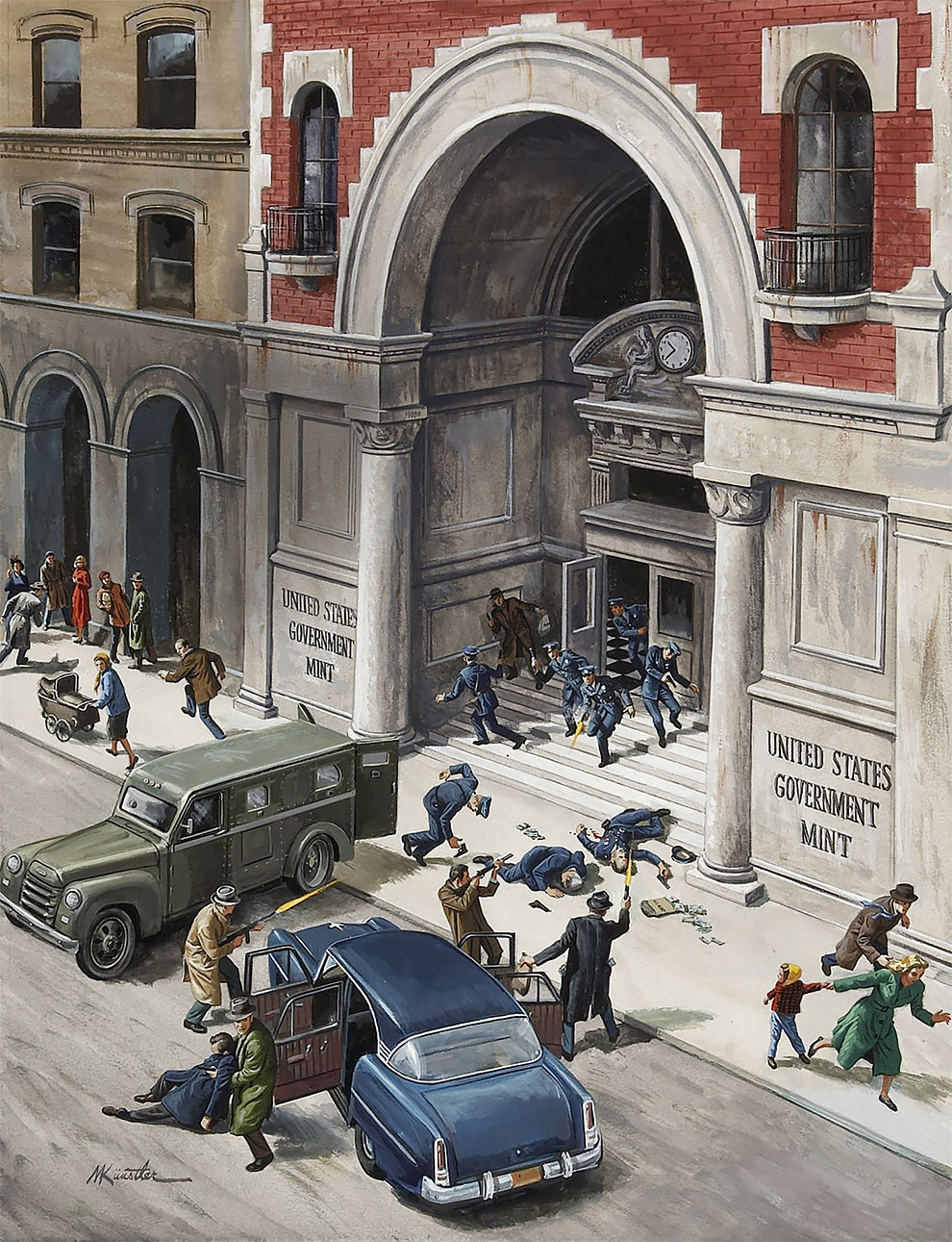
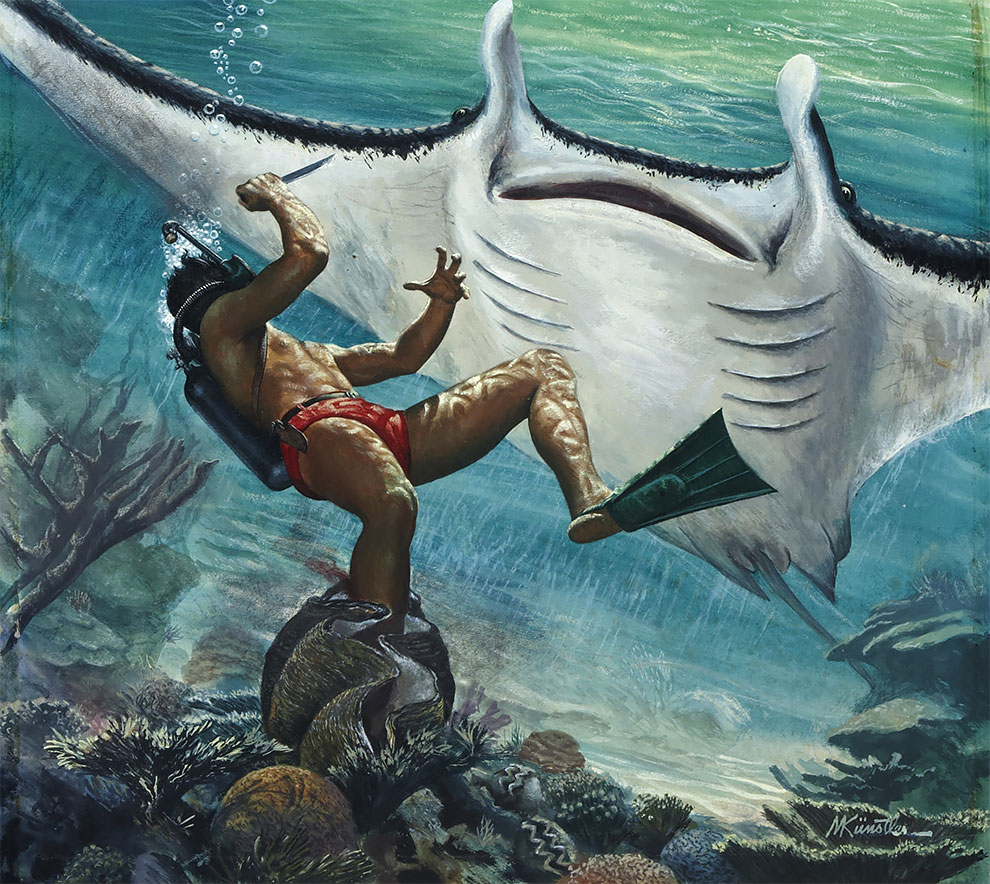
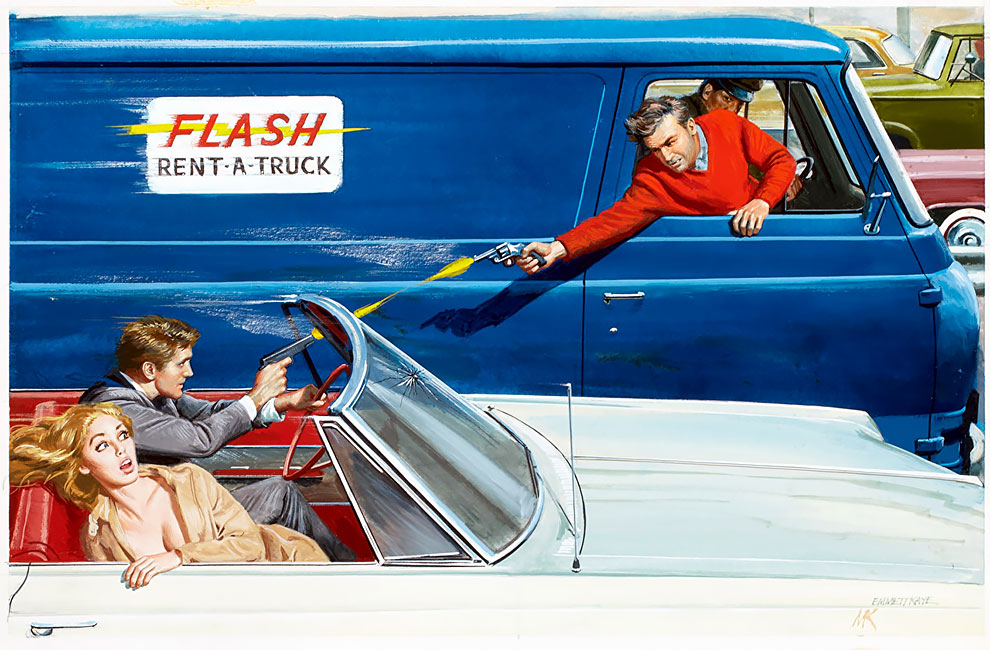
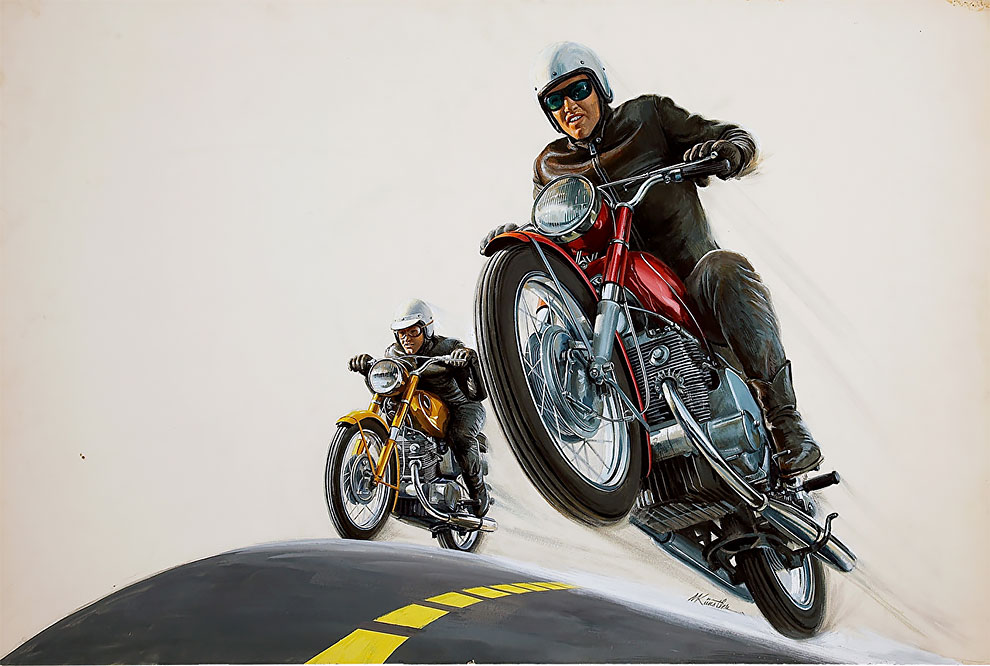
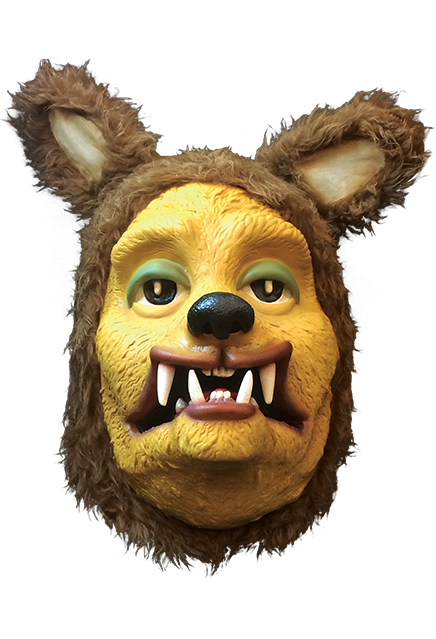
Holy shit, how cool would this be?
Trick or Treat Studios and Warner Brothers are proud to present the officially licensed The Shining Roger the Dogman Mask.
Based on hundreds of images of the actual screen used mask, this is the ultimate replica of the Rodger the Dogman in the Stanley Kubrick classic, The Shining.
Sculpted by Megan Many, every detail of Rodger the Dogman can be seen in this incredible mask.
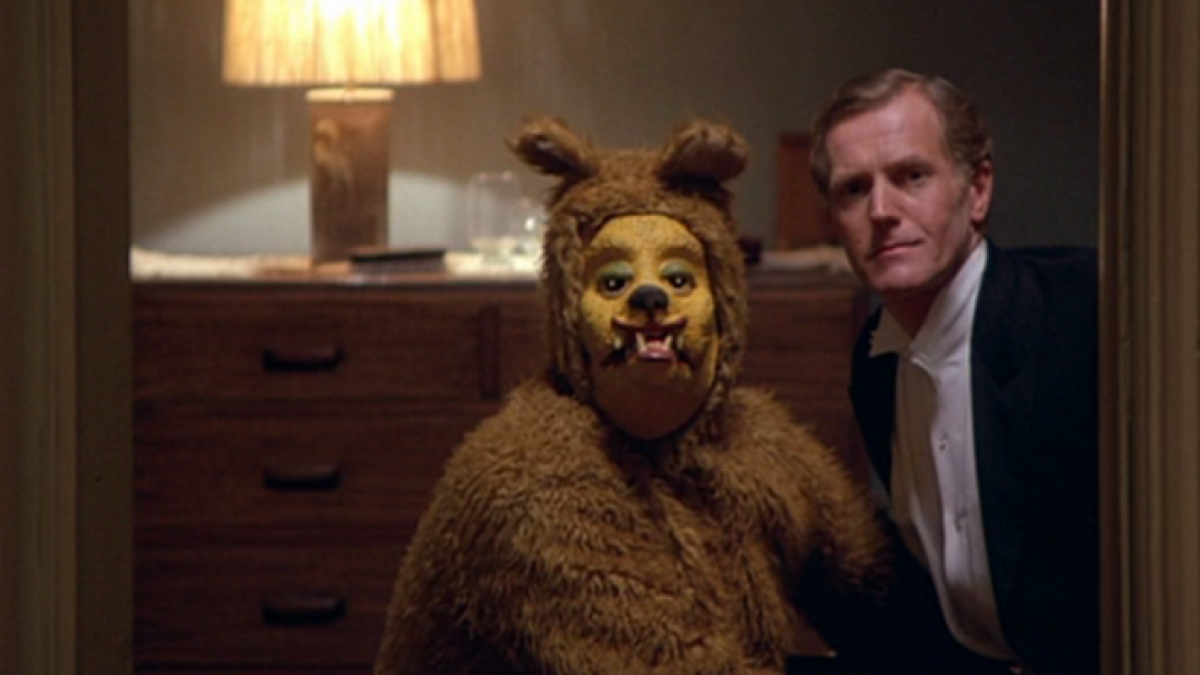
$59.99! Cheap! Get yours here!
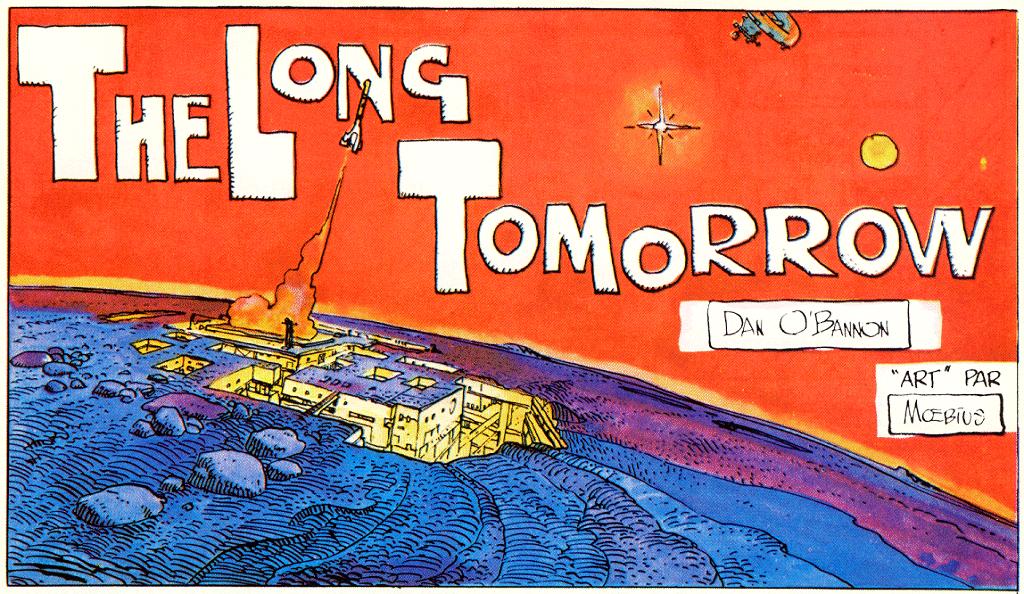
Besides creating a shitload of brain-melting comics, Moebius (Jean Giraud) contributed storyboards and concept designs to numerous science fiction and fantasy films, including Alien, Tron, The Fifth Element and The Abyss. I’ve been on a big Moebius kick lately, and I’ve settled on “The Long Tomorrow” to share with you bastards.
According to the man himself …
I drew “The Long Tomorrow” in 1975, while I worked with Alexandro Jodorowsky on a film adaption of “Dune.” Originally Douglas Trumbull was to do the special effects, but that was not to be so Jodorowsky hired Dan O’Bannon to replace him. Dan came to Paris. Bearded, dressed in a wild style, the typical Californian post-hippie. His real work would begin at the time of shooting, on the models, on the hardware props. As we were still in the stage of preparations and concepts, there was almost nothing to do and he was bored stiff. To kill time, he drew. Dan is best known as a script writer, but is an excellent cartoonist. If he had wished, he could have been a professional graphic artist. One day, he showed me what he was drawing. It was the story board of “The Long Tomorrow.” A classic police story, but situated in the future. I was enthusiastic. When Europeans try this kind of parody, it is never entirely satisfactory, the French are too French, the Italians are too Italian … so, under my nose was a pastiche that was more original than the originals. A believer in parody, Dan continued that tradition. As the story was very strong, I immediately asked if he would allow me to play around graphically, with complete freedom, without conventional pyrotechnics, to refocus on the floating point of view. Pete Club’s costume, for example, was almost ridiculous, far from the traditional raincoat of Bogart. It was the same for most of the visual elements. I scrupulously followed Dan’s story. One day I wish we could publish our two versions side by side. As the strip has pleased everyone, I asked Dan about a sequel, but it did not get his attention, so was simply an adventure I never designed.
This story heavily influenced everyone from writer William Gibson (Neuromancer) to Ridley Scott (Blade Runner) to George Lucas (Empire Strikes Back). If the launchpad sentinel looks familiar to Star Wars fans, it’s because Lucas lifted its design in toto for the probe droid. O’Bannon did a ton of stuff later on, but is perhaps best-known for writing Alien and directing Return of the Living Dead.
Musician humor at its finest.
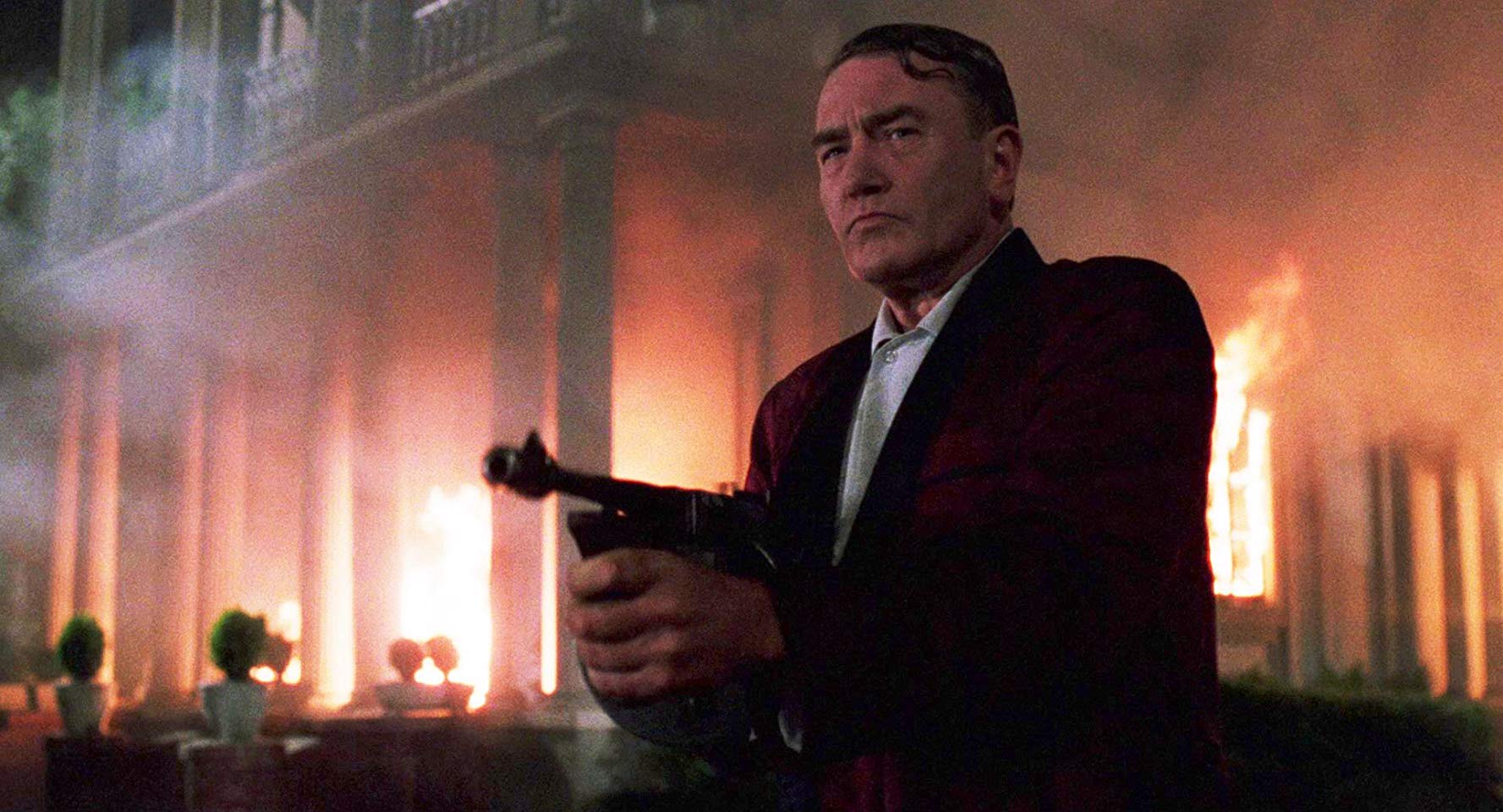
Albert Finney, aged 82, has shuffled off this mortal coil.
Think I’ll watch Miller’s Crossing this weekend …
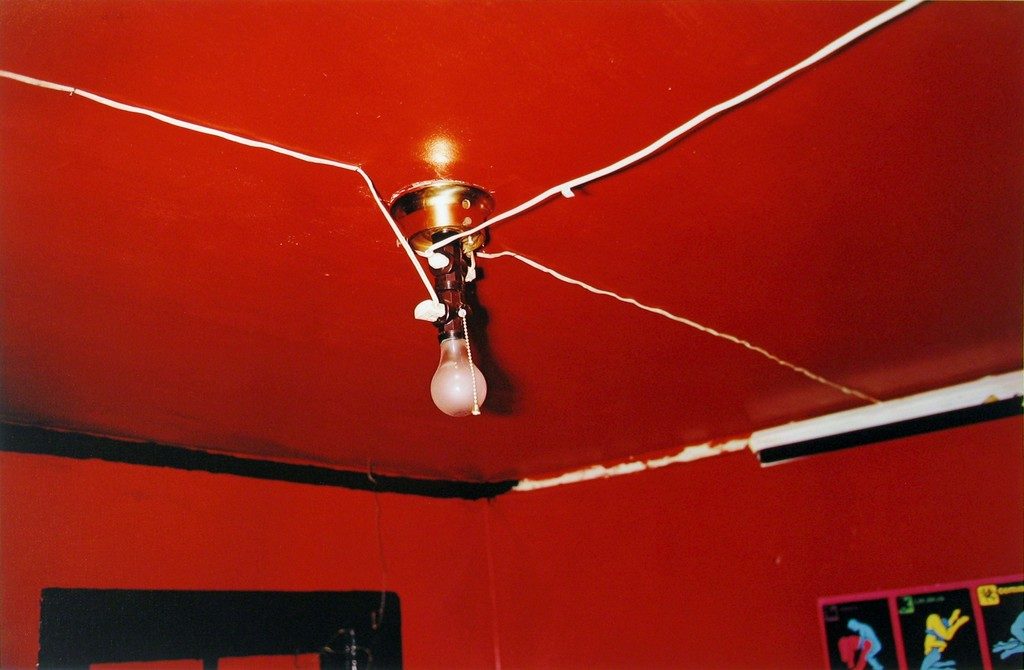
Fascinating and sad.
According to the Oxford American …
The house in the photograph belonged to a man named Tom “T. C.” Boring, a dentist born and raised in Greenwood, whom Eggleston has described as the best friend he ever had in the world. He was the scion of a well-respected Delta family, a sharp and promising Southern archetype who glided his way through the University of Mississippi, Loyola University, and the Navy before coming home to Greenwood and gradually, ungracefully losing his mind.
Full article here. As always, enjoy or don’t.
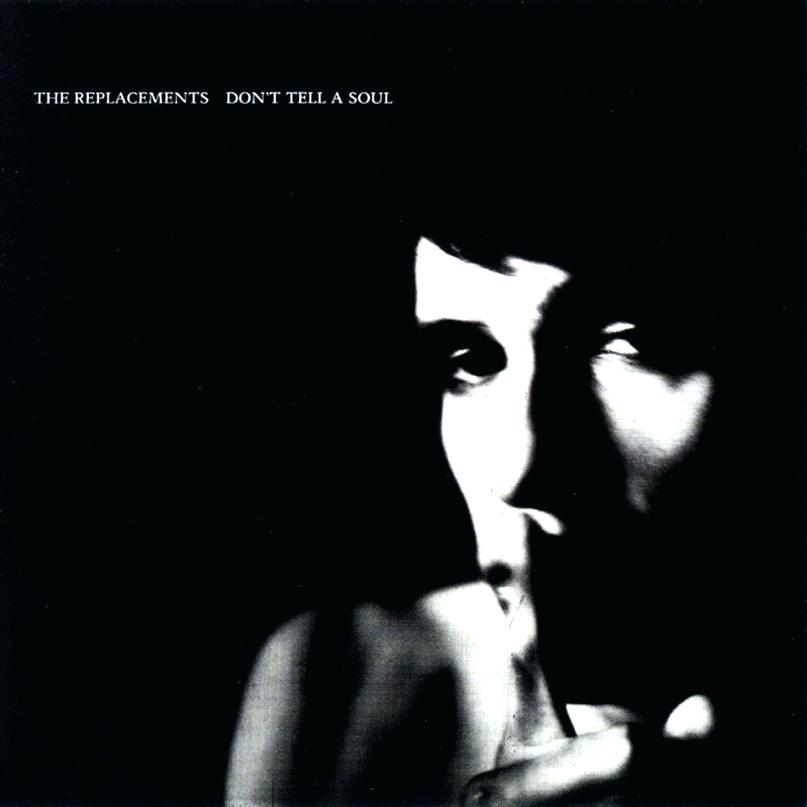
Released February 1, 1989. This makes me feel older than turning 50. To put it in perspective, this post is the equivalent of the 20-year-old me in 1989 talking about an album that came out in 1959.
Wiki-wiki-wikipedia says …
Don’t Tell a Soul marked the debut of Bob “Slim” Dunlap, who replaced founding guitarist Bob Stinson. The album was recorded at Cherokee Studios in Los Angeles and produced by Matt Wallace and the band. It was mixed by Chris Lord-Alge, who decided to give the record “a three-dimensional, radio-ready sound”. However, singer and guitarist Paul Westerberg was not satisfied with the new direction, commenting: “I thought the little things I’d cut in my basement were closer to what I wanted.”
To celebrate, let’s all take a moment and watch one of my favorite rock ‘n’ roll moments.
As explained by a lesser blog …
Before the show, they were told they needed to change the line, “We’re feeling good from the pills we took.” Well, fittingly, Westerberg did no such thing, and the censors were obviously ready for it, as the tape goes silent during that section of the song. What the censors at ABC didn’t anticipate was this: Near the conclusion of “Talent Show” the lyrics address the time when the band hits the stage and there’s no retreating: “It’s too late to turn back, here we go” is repeated twice on the album version, but here Westerberg has changed the line to “It’s too late to take pills, here we go”—ha! The censors missed it and they’ve pissed everyone off again! To add insult, the line is sung three times.
And I don’t care what you say.
Laurel & Hardy, one of the world’s great comedy teams, set out on a variety hall tour of Britain in 1953. Diminished by age and with their golden era as the kings of Hollywood comedy now behind them, they face an uncertain future. As the charm and beauty of their performances shines through, they re-connect with their adoring fans.
The tour becomes a hit, but Stan & Ollie can’t quite shake the specter of Laurel and Hardy’s past; the long-buried ghosts, coupled with Oliver’s failing health, start to threaten their precious partnership. A portrait of the most tender and poignant of creative marriages, they are aware that they may be approaching their swan song, trying to rediscover just how much they mean to each other.