Still one of the catchiest songs ever, I don’t care who you are.
Pure Evil
Dimitri Shostakovich wrote this (2nd movement, Symphony #10) as a musical portrait of Stalin, who had harrassed him directly and indirectly throughout his career. This is pure malevolence, published after Stalin was safely dead. While Uncle Joe was alive, DS was mostly confined to putting out government approved, “socalist realist” garbage, while keeping much of his “real” work private. Occasionally he could put one over on the Soviets and follow the letter of their requirements while mocking them. One cool thing is that in the finale of this same symphony, he has a theme based on his initials, DSCH, vie for dominance against the Stalin theme from this movement. DSCH wins. Artistic revenge at its finest. “He who laughs last, laughs longest.”
The conductor seems a little too into his hair, and I’m not sure why he appears to be grinning during this grim business. But you’ve gotta give him credit, his musicians are playing the hell out of this. He made his reputation whipping these young Venezuelans into a respectable unit. He’s since gone on to greener pastures in LA.
What’s The Deal With That Song?
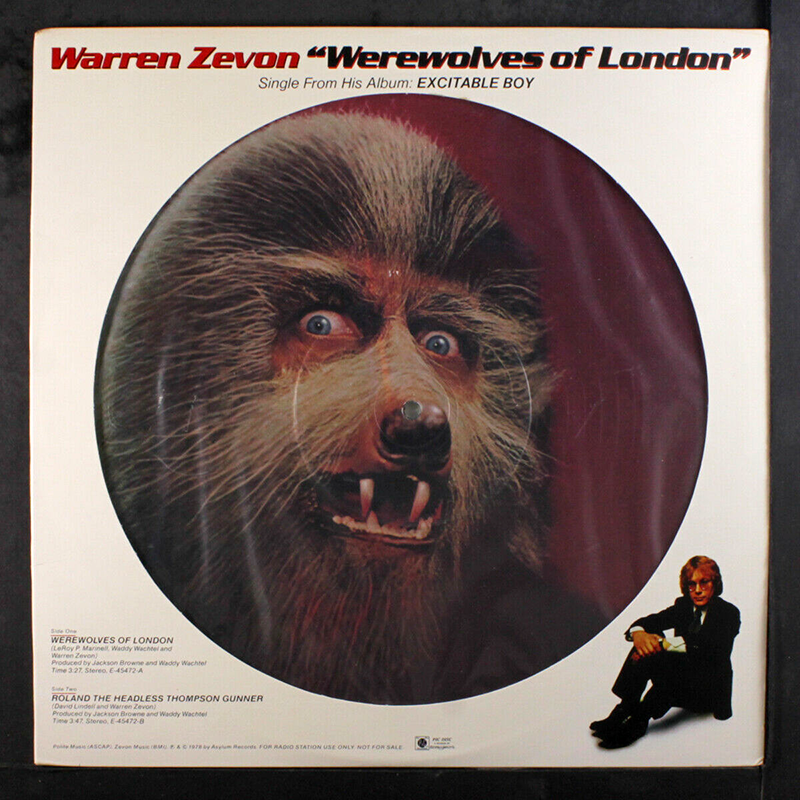
It’s such a fine line between stupid and clever. Somehow, this song manages to be both. I’ve heard “Werewolves of London” on the radio most of my life without ever giving it much thought – until today.
You might know that this was the first single off Excitable Boy, Zevon’s third solo album. You might even know that it stayed in the Billboard Top 40 for a month, reaching number 21 on the Hot 100 in May of 1978. But did you know Mick Fleetwood and John McVie are playing on it? Wikipedia, where you at?
The song began as a joke by Phil Everly (of The Everly Brothers) to Zevon in 1975, three years before the recording sessions for Excitable Boy. Everly had watched a television broadcast of the 1935 film Werewolf of London and “suggested to Zevon that he adapt the title for a song and dance craze.” Zevon, LeRoy Marinel and Waddy Wachtel played with the idea and wrote the song in about 15 minutes, all contributing lyrics that were transcribed by Zevon’s then-wife Crystal. The song is in the key of G major, with a three-chord progression that runs throughout. However, none of them took the song seriously.
Not long after, Jackson Browne saw the lyrics and thought it had potential, so he started playing “Werewolves” live. (T-Bone Burnett also played it on the first leg of Bob Dylan’s Rolling Thunder Review in 1975.) Zevon thought about putting it on his second solo album in 1976, but for some reason, decided against it.
According to Wachtel, “Werewolves of London” was “the hardest song to get down in the studio I’ve ever worked on.” They tried at least seven different configurations of musicians in the recording studio before being satisfied with McVie and Fleetwood’s contributions. The protracted studio time and musicians’ fees led to the song eating up most of the album’s budget.
Zevon later said of the song, “I don’t know why that became such a hit. We didn’t think it was suitable to be played on the radio. It didn’t become an albatross. It’s better that I bring something to mind than nothing. I still think it’s funny.” He also described “Werewolves of London” as a novelty song, “[but] not a novelty the way, say, Steve Martin’s ‘King Tut’ is a novelty.”
We Want Sweet!
Okay – you have to admit, this YouTube discovery is pretty …
Wait for it …
Cool.
What did you think I was gonna say?
A BBC documentary originally broadcast in February 1974 charting 24 hours in the life of a rock band that asks the question: “Is the music business really that glamorous?”
The show contains live material shot on the 21st December 1973 during their legendary concert in the Rainbow Theatre, London.Featuring the original line-up:
Brian Connolly – lead vocals
Andy Scott – guitar, synthesizer, vocals
Steve Priest – bass, vocals
Mick Tucker – drums, percussion, vocals
Rolling Stones Gather Moss
In 1964 the Stones were young, sweet and innocent.
The Rolling Stones (Mick Jagger, Keith Richards, Brian Jones, Bill Wyman, Charlie Watts) have a little fun trying to hitchhike along the side of the road and then head onto play a show in Hull, England in front of hundreds of screaming teens in 1964.
For comparison, here they are a mere six years later performing some type of Satanic rite …
Forgotten Music From The Eighties
Tony Carey as Planet P. I haven’t heard this song in probably 30 years. Wiki-wiki-wikipedia says …
Following the release of I Won’t Be Home Tonight, Carey was signed to Geffen Records for his third solo album (later to be released as Some Tough City), but he had a great deal of music written that didn’t fit the style of that album. He was able to sign a second record deal with Geffen to record and release that material under the Planet P Project pseudonym, which he would use throughout his career for his more progressive and experimental music. He released his first album under the name Planet P Project in 1983, called Planet P Project (originally titled Planet P), which peaked at #42 on the Billboard 200. On the week ending March 19, 1983, both Planet P Project and Carey’s earlier album I Won’t Be Home Tonight were climbing Billboard’s Rock Albums chart simultaneously, with Planet P Project then at #30 and I Won’t Be Home Tonight reaching its peak at #8. (The following week Planet P Project had made it up to #15, though I Won’t Be Home Tonight had slipped to the #10 position). Planet P Project received modest reviews, despite being listed for two weeks by Billboard as a Top Add. The album, however, contained the more highly acclaimed song “Why Me”, which was released as Planet P Project’s first popular single, reaching #64 on the Billboard Hot 100 singles chart and #4 in the magazine’s Top Rock Tracks chart.
Turns out, this guy was in Rainbow with Ronnie James Dio!
All 139 The Clash Songs, Ranked From Worst To Best
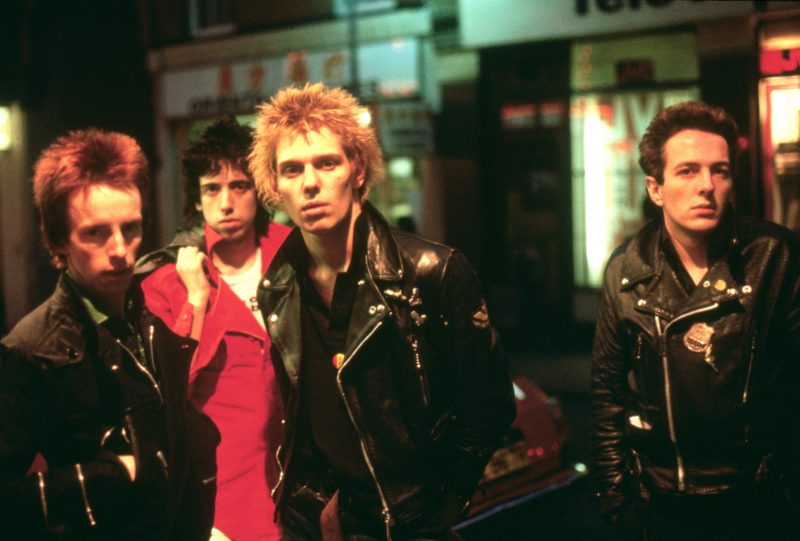
Some (most?) of these picks are absolutely ridiculous. The suggestion that anything off Sandinista! qualifies for the top 25 invalidates the list completely. Still, it’s a good time-waster if you’re stuck somewhere.
If you don’t care to look through the whole thing, here are the top 10.
10. “Rock the Casbah,” Combat Rock (1982)
9. “The Card Cheat,” London Calling (1979)
8. “Stay Free,” Give ‘Em Enough Rope (1978)
7. “Death or Glory,” London Calling (1979)
6. “The Magnificent Seven,” Sandinista! (1980)
5. “Complete Control,” single (1977)
4. “Hitsville UK,” Sandinista! (1980)
3. “London Calling,” London Calling (1979)
2. “Straight to Hell,” Combat Rock (1982)
1. “(White Man) in Hammersmith Palais,” single (1977)
Whole stupid thing here.
Stay Free
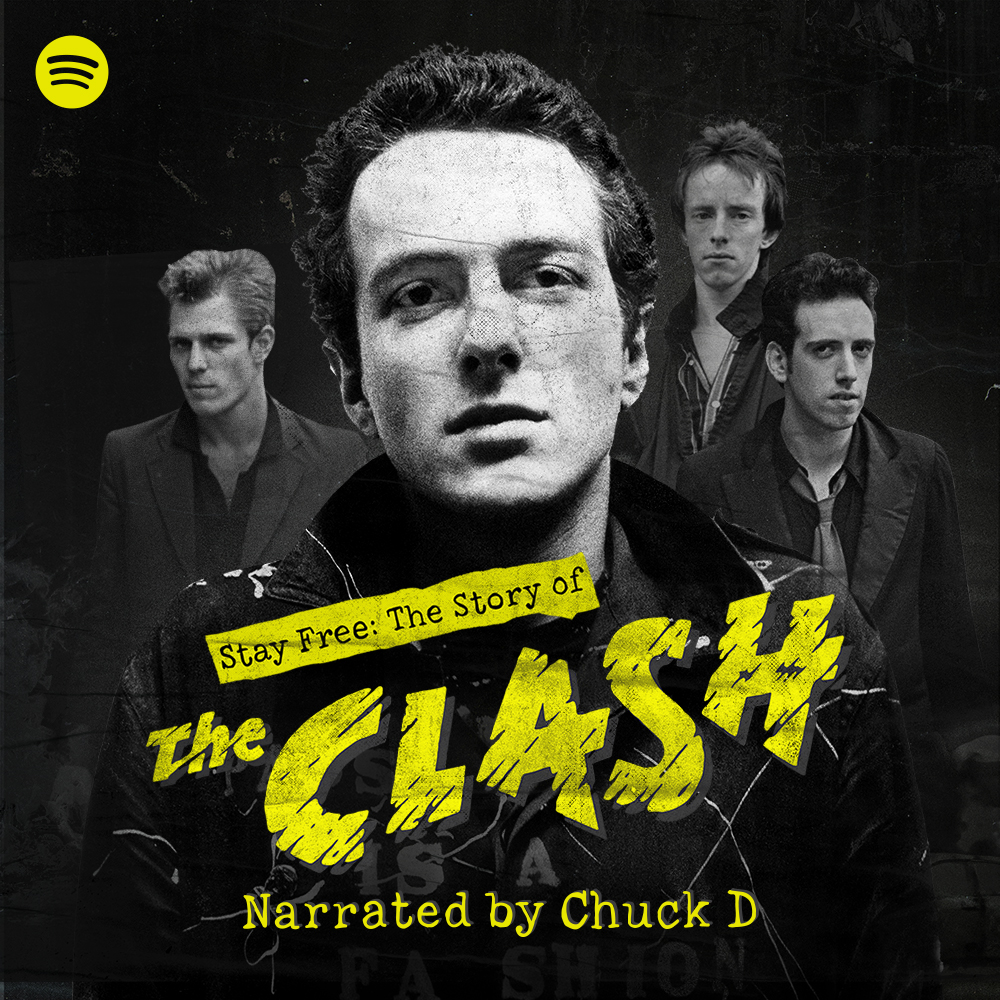
I Had A Vision When I Was Young
This is such a great song.
Guitar riffs don’t come any simpler than this one, but the keyboard squiggles, horny lyrics and head-bobbing rhythms on this one are undeniably fun.
John M. Borack, Shake Some Action: The Ultimate Power Pop Guide
Somehow, I’ve never seen Cheap Trick live. SO MANY MISSED OPPORTUNITIES. Next time they’re anywhere close, I’m going. Sucks that I missed the Bun E. Carlos years, though.
Looking For Stiv
Goddamn, I’m a sucker for these things.
In his second punk documentary, filmmaker Danny “Looking for Johnny” Garcia takes a deep dive into the life and legacy of the Dead Boys front man. Included in STIV is some rare footage and lore about Stiv’s surprising career before and after the Dead Boys, as well as the hilarious stories and hijinks one associates with the punk legend who died at age 40 in 1990.
Interview with the director right over here.
And here’s a panel interview from the world premiere a few days ago.