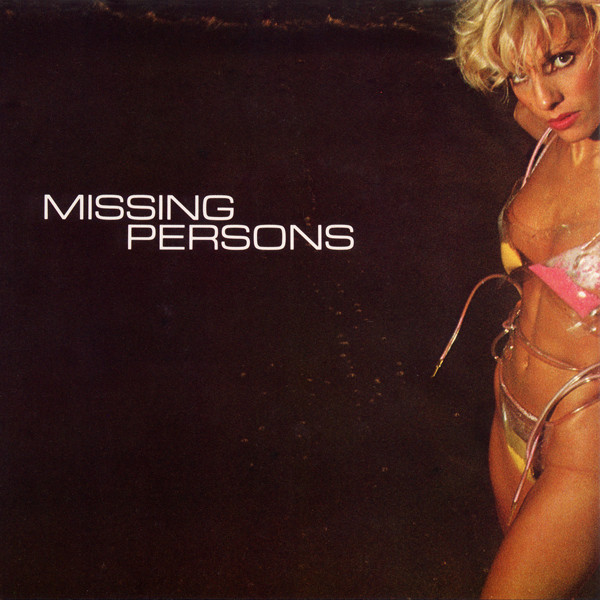
There’s a special place in my heart for the first self-released Missing Persons EP. Although technically, it’s the 1982 re-release I love, the one that replaced the original EP’s “Hello, I Love You” with “I Like Boys.” At this stage in my life, I don’t know if it’s an entirely accurate memory, but it seems like we spent a lot of time blasting this in a friend’s car one summer.
Anyway, as we’re living in the Digital Age, I now present to you the videos for the songs from that glorious EP.
Willy Wonka is usually a very pleasant (albeit eccentric) chocolate tycoon. But when Charlie Bucket and Grandpa Joe steal the fizzy lifting drinks, he succumbs to a maniacal fit of rage and informs them that they get NOTHING!
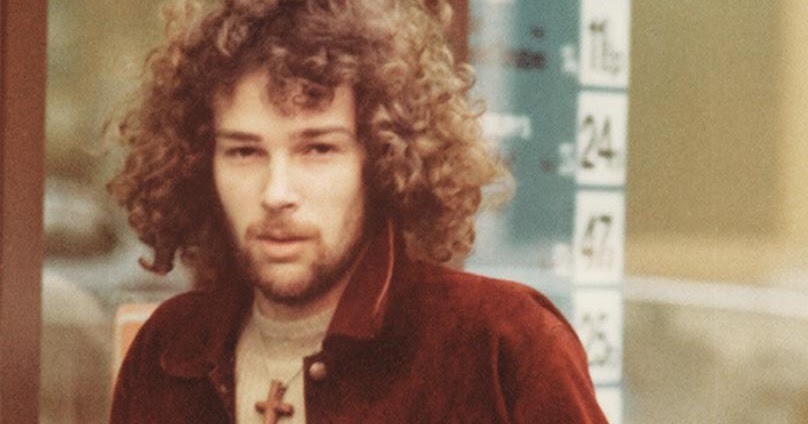
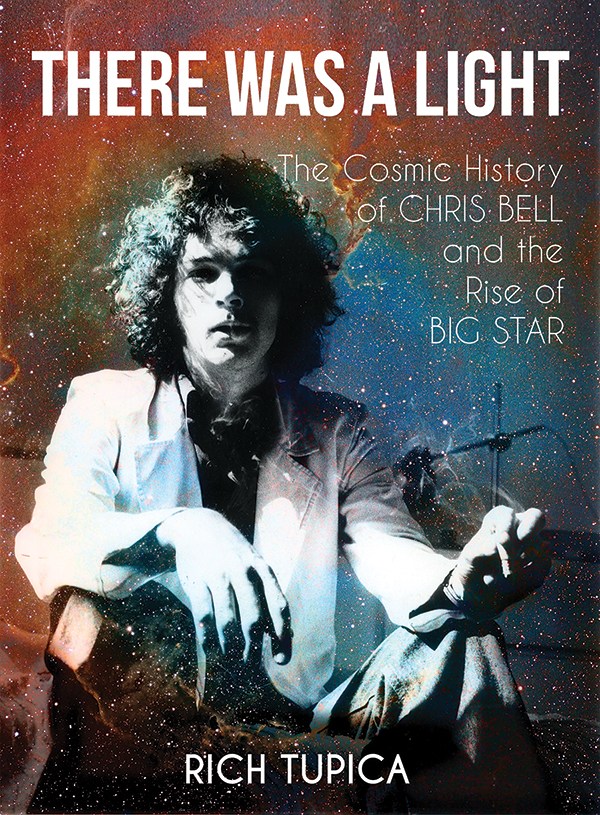
Today on the Please Kill Me blargh, Bruce Eaton, author of Big Star’s Radio City (33 1/3 series) chats up Rich Tupica, author of There Was A Light: The Cosmic History of Chris Bell and the Rise of BIG STAR, the recent Chris Bell biography.
Just as an aside, when social media first made me aware of the Chris Bell book, I didn’t make any plans to read it. The whole thing seemed rather sketchy, a paperback written by an author I wasn’t familiar with, published by HoZac Records. I wasn’t a huge fan of that cover (it’s growing on me), and besides, it was $40.00! For a paperback! When it sold out, I figured that was that.
But since then, all I’ve seen are glowing reviews. So when I read the PKM piece this morning, I checked the HoZac site for a status update. Second printing is shipping now, and I’ve got a birthday coming up.
After FIVE solid years of painstaking research and hard work, Rich Tupica’s epic tome on the deep end of the BIG STAR story is ready. At 400+ pages, There Was A Light is stocked with a wealth of previously-unseen color photos, personal ephemera from the Bell family’s archive, as well as everything Ardent Studios could jam in, it’s nothing short of breathtaking stuff! Starting with intense coverage of Bell’s childhood bands and continuing deep into his post-Big Star solo work, this book delves into the details beyond the documentary, distilling countless hours of minutiae into a riveting oral history of one of rock’n’roll’s most beloved cult bands, and a trip through Memphis underground music history like no other.
Happy birthday to me
Happy birthday to me
I look like a monkey
And snobby rock books ain’t free
After Mark E Smith, Goldie, Liam Gallagher and John Lydon, Paul Simonon of The Clash joins host John Doran to be inducted as a British Master.
Originally known as the bass player in The Clash, a lifelong artist and style obsessive, Paul was one of the key architects of the aesthetics of punk. His obsession with dub and reggae helped broaden the sound of The Clash gloriously. We spoke to him in Damon Albarn’s West London Studio, where they were rehearsing for their upcoming tour as one half of The Good, The Bad & The Queen.
This is a BBC4 documentary about Primal Scream’s trip to Memphis to record an album that wouldn’t see the light of day for 25 years. (These mixes, anyway.) I love this shit.
All 70 tracks! It’s the full compilation of absolutely terrible, yet hilarious stage banter from Paul Stanley of KISS, who by the way, is absolutely, positively not a repressed gay man.
A few years ago, I was surprised to learn the true origins of “Rock the Casbah,” the only Clash single to make the top 10 in the Billboard Hot 100.
“Rock the Casbah” was musically written by the band’s drummer Topper Headon, based on a piano part that he had been toying with. Finding himself in the studio without his three bandmates, Headon progressively taped the drum, piano and bass parts, recording the bulk of the song’s musical instrumentation himself.
This origin makes “Rock the Casbah” different from the majority of Clash songs, which tended to originate with music written by the Strummer–Jones songwriting partnership. Upon entering the studio to hear Headon’s recording, the other Clash members were impressed with his creation, stating that they felt the musical track was essentially complete. From this point, relatively minor overdubs were added, such as guitars and percussion.
However, Joe Strummer was not impressed by the page of suggested lyrics that Headon gave him. According to Clash guitar technician Digby Cleaver, they were “a soppy set of lyrics about how much he missed his girlfriend”. “Strummer just took one look at these words and said, ‘How incredibly interesting!’, screwed the piece of paper into a ball and chucked it backwards over his head.”
Strummer had been developing a set of lyrical ideas that he was looking to match with an appropriate tune. Before hearing Headon’s music, Strummer had already come up with the phrases “rock the casbah” and “you’ll have to let that raga drop” as lyrical ideas that he was considering for future songs. After hearing Headon’s music, Strummer went into the studio’s toilets and wrote lyrics to match the song’s melody.
The version of the song on Combat Rock, as well as many other Clash compilations, features an electronic sound effect beginning at the 1:52 minute point of the song. This noise is a monophonic version of the song “Dixie”. The sound effect source was generated by the alarm from a digital wristwatch that Mick Jones owned, and was intentionally added to the recording by Jones.
Sadly, Headon was kicked out of the band for heroin addiction just four days before Combat Rock was released. Also, one of my friends had that same “Dixie” digital watch when we were in the sixth grade. He annoyed the shit out of us with it.
Chip Taylor, legendary songwriter and brother of Jon Voight, is still cranking ’em out at almost 80 years old. A fellow music snob turned me on to this one the other day. See what you think.