Who Moved Stonehenge?


”Archaeologists believe they may have discovered the true origins of the ancient Stonehenge monument after unearthing evidence some of the materials may have served a previous purpose elsewhere.
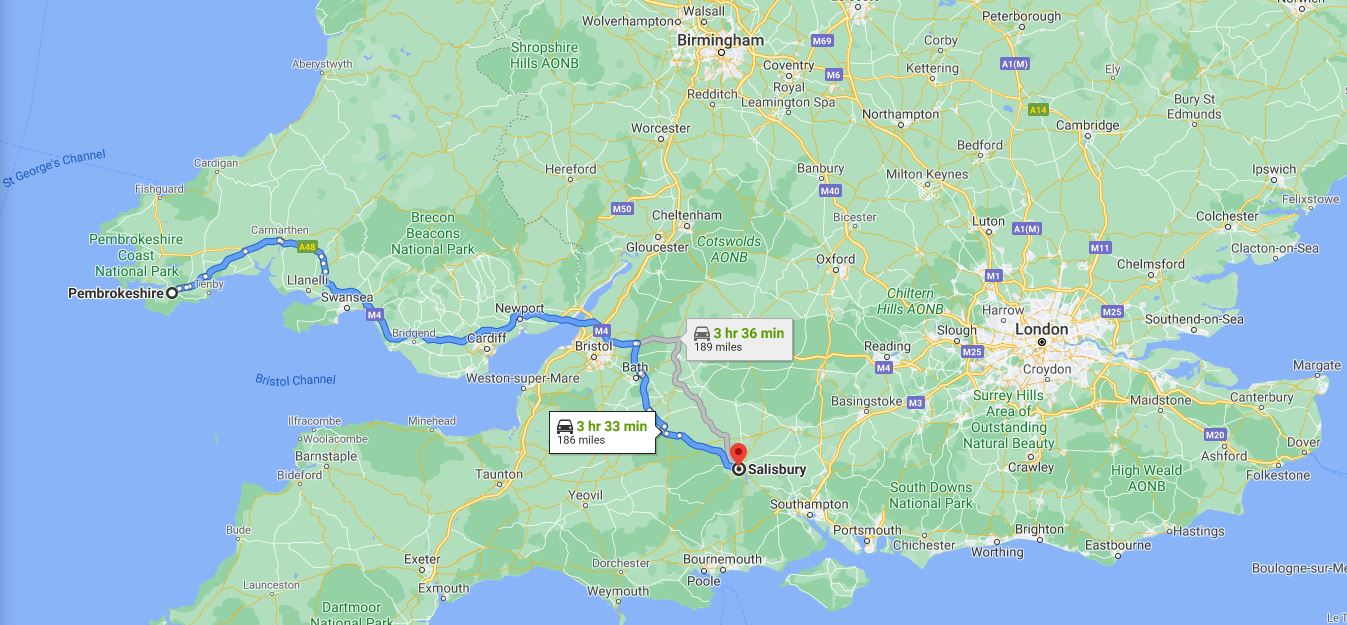
Experts have long worked at the site to find out more about why and how the ancient wonder was built – with some of the volcanic bluestones used in the structure being brought 160 miles to the site from their point of origin in Wales.Now researchers have uncovered signs the smaller bluestones originally formed an even older, long-lost monument in the Preseli Hills in Pembrokeshire, Wales.During filming for the BBC documentary Stonehenge: The Lost Circle Revealed, a team led by Professor Mike Parker Pearson uncovered signs the stones had been left in the western Welsh moorlands.
Professor Alice Roberts said the archaeologists “were always up against it”, adding: “they had a terrible time. They’ve been doing this for about 10 years.
“They looked in lots of different places and didn’t find anything. They were almost on the brink of giving up and then they looked at this particular place called Waun Mawn.”
“They decided that they were going to dig anyway and just see if they can find anything, and they found these ghosts of stone holes,” Prof Roberts said. “And they were exactly the same diameter as the outer circle at Stonehenge.”
Archaeologists used 3D scanning techniques, traditional field archaeology, and laboratory analysis to discover when and where the stones for Stonehenge were quarried and where they first stood.
But while the question of where the stones came from may have been answered, why they were transported to England may remain a mystery for now.
Prof Roberts said: “Of course there are questions about why these stones would have been brought from West Wales to Salisbury Plain … but ultimately it’s pre-history and we don’t know.”

—————

Dammit, Nigel.

More here.

Hey! I Can Last Four Seconds

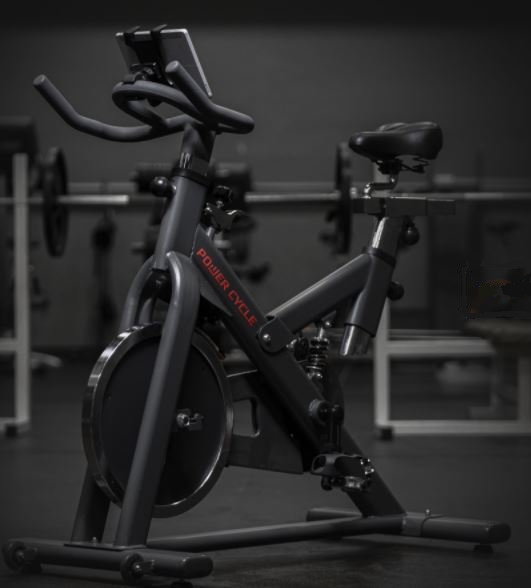
New developments in How Little Can I Exercise: if you crank the above heavy flywheel – zero resistance bike at max effort for FOUR SECONDS at one-minute intervals, you see:

– increased overall fitness
– increased muscle mass and leg strength
– reduced stiffness of your arteries

The HIIT (high intensity interval training) workouts have gone berserk. Fifteen four-second bursts, three days a week for several weeks, gets you the benefit. They’ve finally studied it in old schlubs like us.

JUST LOOK AT THESE HAPPY FOOLS!

It’s like, one minute of actual exercise per day. Story here.

How much does this surely overly-expensive proprietary bike cost? They won’t say on their website. Makerbot build me one!
Music Will Save Us All?

As this site’s extremely senior medical correspondent, I’m happy to report that I received my first COVID 5g chip a couple of weeks ago and am scheduled to inject the second one tonight. My corpuscles and sinews have nearly hit the intended full metal zone vibrato. More on the uh, science, here.

Would You Like To Play A Game?

Play here.

This is Life, a simple computer game designed by John Conway in 1970. It has three rules:

– Birth rule: An empty, or “dead,” cell with precisely three “live” neighbors (full cells) becomes live.

-Death rule: A live cell with zero or one neighbors dies of isolation; a live cell with four or more neighbors dies of overcrowding.

– Survival rule: A live cell with two or three neighbors remains alive

It has fascinated people for years.

”I first encountered Life at the Exploratorium in San Francisco in 1978. I was hooked immediately by the thing that has always hooked me — watching complexity arise out of simplicity.

Life ought to be very predictable and boring; after all, there are just three simple rules that determine the position of some dots on a grid. That really doesn’t sound very interesting until you start tweaking those rules and watching what changes.

Life shows you two things. The first is sensitivity to initial conditions. A tiny change in the rules can produce a huge difference in the output, ranging from complete destruction (no dots) through stasis (a frozen pattern) to patterns that keep changing as they unfold.”

– Brian Eno

More here.